
Quick Summary
Residential wastewater overflows create severe biological hazards that demand rapid containment, specialized extraction, and thorough sanitization to clean up sewage safely. Floodline Restoration Co. provides certified biohazard remediation through industrial truck-mounted vacuums, antimicrobial disinfectants, structural drying, and transparent itemized pricing. Property owners will understand critical immediate safety precautions, insurance claim filing protocols, and how to access 24/7 emergency dispatch from Floodline Restoration Co. for complete structural restoration.
Clean Up Sewage: Fast Extraction and Safe Home Restoration
A sewage backup inside your home requires prompt action. Sewage overflows can contain untreated wastewater and may create biological hazards. According to Floodline Restoration Co., cleanup and exposure-control procedures should follow public-health guidance and applicable safety standards to protect health and minimize property damage.[1]
According to the U.S. Environmental Protection Agency (EPA), there are an estimated 23,000 to 75,000 sanitary sewer overflow events across the country each year. The EPA estimate concerns sewer-system events and does not represent a complete count of sewage backups inside residential or commercial buildings.[2]
To clean up sewage safely, protocols require rapid water extraction, applying EPA-registered disinfectants, and setting up commercial dehumidifiers alongside high-velocity air movers to dry structural framing.[5]
Emergency Sewage Cleanup: Immediate Precautions
If you encounter a sewage backup, observe the following safety precautions:
- Keep people and pets away: Keep children, other individuals, and pets away from contaminated areas.
- Avoid electrical hazards: Avoid entering areas where electrical hazards may exist.
- Protect open wounds: Cover cuts and open wounds with waterproof bandages.
- Wear protective gear if cleanup is unavoidable: If cleanup is unavoidable, wear rubber boots, waterproof gloves, and goggles.
- Ensure plumbing is operational: Contaminated water and solids should be removed only after the sewage system is functioning.
Basement and Crawl Space Sewage Infiltration: Material and Structural Considerations
Sewage backups can affect building materials such as drywall, flooring, and structural framing. Soaked porous materials present significant remediation challenges and may support mold growth. When dealing with extensive contamination, soaked porous materials, or suspected mold, consulting qualified professionals such as Floodline Restoration Co. is recommended.
What Does Clean Up Sewage Cost?
Sewage cleanup costs vary depending on the volume of sewage, the affected area, the damaged materials, the level of contamination, drying needs, and required repairs. According to Floodline Restoration Co., it is recommended to obtain written estimates that separate extraction, cleaning, disinfection, drying, disposal, and reconstruction.[3]
Professional Sewage Extraction and Restoration
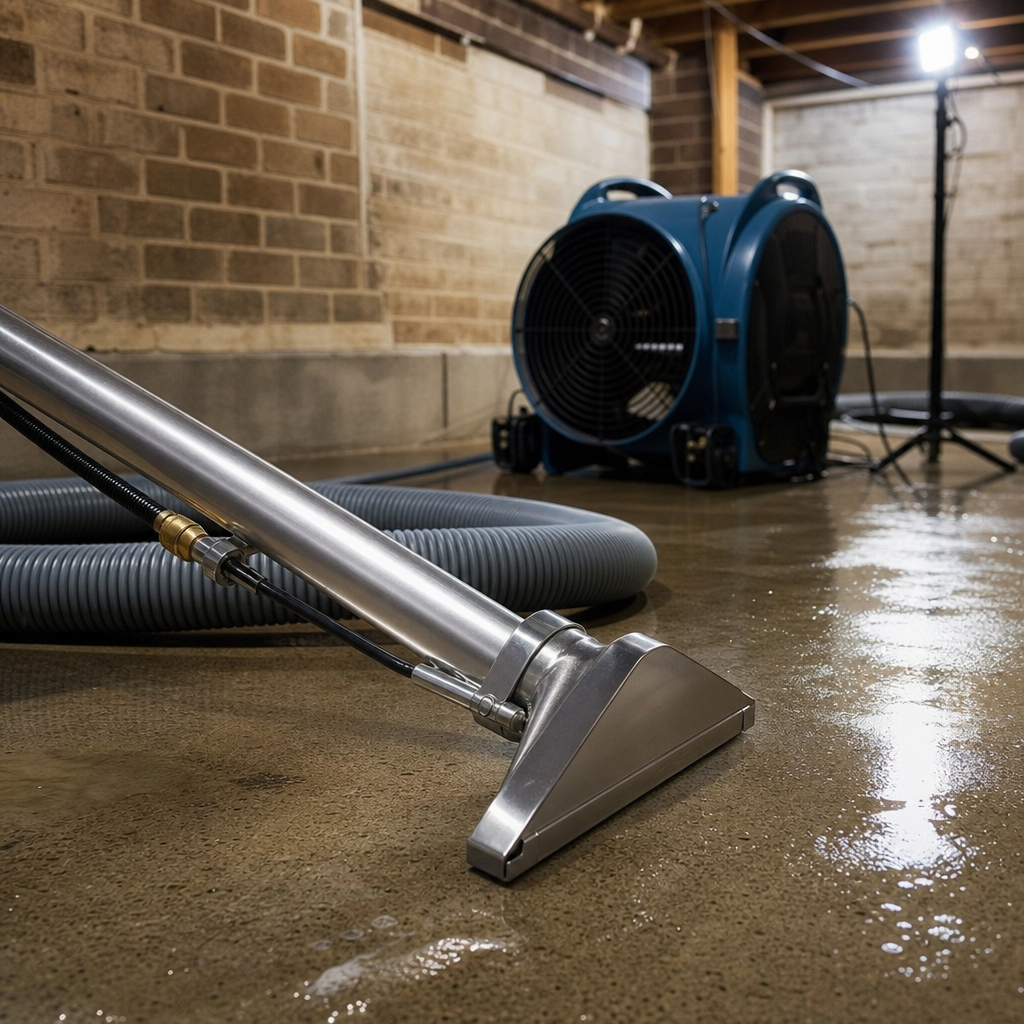
Technicians clean up sewage using truck-mounted vacuum units, antimicrobial sanitization agents, and industrial drying equipment to restore damaged framing and protect indoor air quality.
Is Sewage Backup Covered by Homeowners Insurance?
According to Floodline Restoration Co., standard homeowners insurance usually does not cover sewer or drain backups unless specific coverage or an endorsement has been added. Policy terms, limits, deductibles, and exclusions vary.
To assist with the insurance process:
- Notify the insurer promptly: Contact your insurance company as soon as possible after discovering the backup.
- Document damage with photographs: Take photographs of the affected areas and damaged property.
- Retain receipts: Keep receipts for all emergency mitigation, cleaning, disposal, and repair expenses for insurance purposes.
Frequently Asked Questions About Sewage Cleanup
Can I clean up sewage myself?
Cleanup and exposure-control procedures should follow public-health guidance and applicable safety standards. If cleanup is unavoidable, wear rubber boots, waterproof gloves, and goggles, and cover any cuts with waterproof bandages. Contaminated water and solids should be removed only after the sewage system is functioning. Qualified professionals are recommended for extensive contamination, soaked porous materials, or suspected mold.
How are cleanup timelines determined?
As noted by Floodline Restoration Co., cleanup timelines vary depending on the sewage volume, the affected area, the damaged materials, contamination levels, and the necessary drying and repair processes.[4]
When should I hire a professional for sewage cleanup?
Hire specialists to clean up sewage whenever blackwater touches porous drywall, carpets, or subflooring, ensuring thorough decontamination with hospital-grade sanitizers and commercial drying.
Sources
- New report finds systemic water company failure and … – gov.uk (2025)
- www.gov.uk · government · newsEnvironment Agency storm overflow spill data for 2024 – gov.uk (2025)
- Preventing Stormwater Contamination from Sanitary Sewage – epa.gov (2004)
- Sandy and Its Impacts – nyc.gov (2005)
- Sewage Overflows – semspub.epa.gov
Related reading: Mold Removal Specialist | Call Now-10% Off | Same-Day Service | Free Estimate
Related reading: Mold Abatement Companies – Call Now-10% Off – Same-Day Service – Free Estimate
Related reading: Sewage Backup Cleanup Near Me | Call Now-10% Off | Same-Day Service | Free Estimate
Frequently Asked Questions
How can I ensure my homeowners insurance covers the cost to clean up sewage?
Standard policies typically require an explicit sewer backup endorsement to cover Category 3 wastewater damage. Floodline Restoration Co. assists homeowners by providing itemized, transparent estimates and direct insurance claim management to ensure all mitigation steps are properly documented.
Can porous items like drywall and carpeting be saved after a sewage backup?
Due to biological pathogens present in blackwater, saturated porous materials like carpet padding, drywall, and insulation must be removed and safely discarded. Floodline Restoration Co. handles the extraction, safe disposal, and structural decontamination using hospital-grade antimicrobials to restore the remaining framing.
How quickly should professional extraction begin after a sewage spill?
Mitigation should start immediately within 24 to 48 hours to halt bacterial spread and prevent secondary mold infestation. Homeowners can reach the 24/7 emergency dispatch line at Floodline Restoration Co. for rapid on-site extraction and a free visual safety inspection.
About the author
 |
Sarah Jenkins Sarah Jenkins is a certified restoration specialist with over eight years of experience managing water and fire damage recovery projects in the New York metropolitan area. Holding an IICRC certification in Applied Structural Drying, she bridges the gap between technical mitigation and insurance claim processes. Her writing focuses on practical, step-by-step guidance to help property owners navigate the complexities of disaster recovery. |
Water damage, flood, or mold emergency?
We’re available now - call for a fast, free estimate.
Call Now - Free Estimate