
Quick Summary
Addressing persistent fungal growth requires more than surface wiping, making a certified mold remediation specialist essential for diagnosing hidden moisture pathways and preventing structural contamination. Floodline Restoration Co. delivers scientific mold remediation in Queens using calibrated moisture meters, thermal imaging, and transparent scopes of work rather than high-pressure scare tactics. After learning how professional containment and structural drying work, property owners can call the 24/7 live dispatch to schedule a free visual mold inspection and diagnostic assessment.
Mold Remediation Specialist: Safe, Fast Mold Removal
When you discover black spots creeping along your baseboards or smell a persistent musty odor after a heavy rain, quick surface cleaning is rarely enough. A qualified mold remediation specialist identifies the hidden moisture feeding the growth, isolates the affected area with containment barriers, removes contaminated building materials when needed, and dries the structure back to standard moisture levels.[1]
Most property owners initially reach for a spray bottle of household bleach. While surface wiping might clean a small patch on tile or porcelain, it does not stop moisture trapped inside framing, subfloors, or plaster. Professional technicians, such as those at Floodline Restoration Co., use thermal imaging cameras and calibrated moisture meters to track water intrusion to its source before developing an itemized, written scope of work for your home.
What Does a Mold Remediation Specialist Do?
A professional mold remediation specialist handles structural drying, fungal cleanup, and containment to prevent cross-contamination throughout the rest of your property. Rather than simply spraying chemicals or fogging a room, an expert follows a structured technical sequence:[3]
- Locates the active moisture source: Finding hidden plumbing leaks, roof failures, foundation seepage, or condensation inside wall cavities.
- Establishes negative air containment: Sealing off doorways and vents with poly sheeting and running HEPA air scrubbers so spores cannot travel into clean rooms during demolition.
- Performs selective removal: Removing damaged or non-salvageable porous materials like drywall, carpet padding, and fiberglass insulation under controlled conditions when needed.
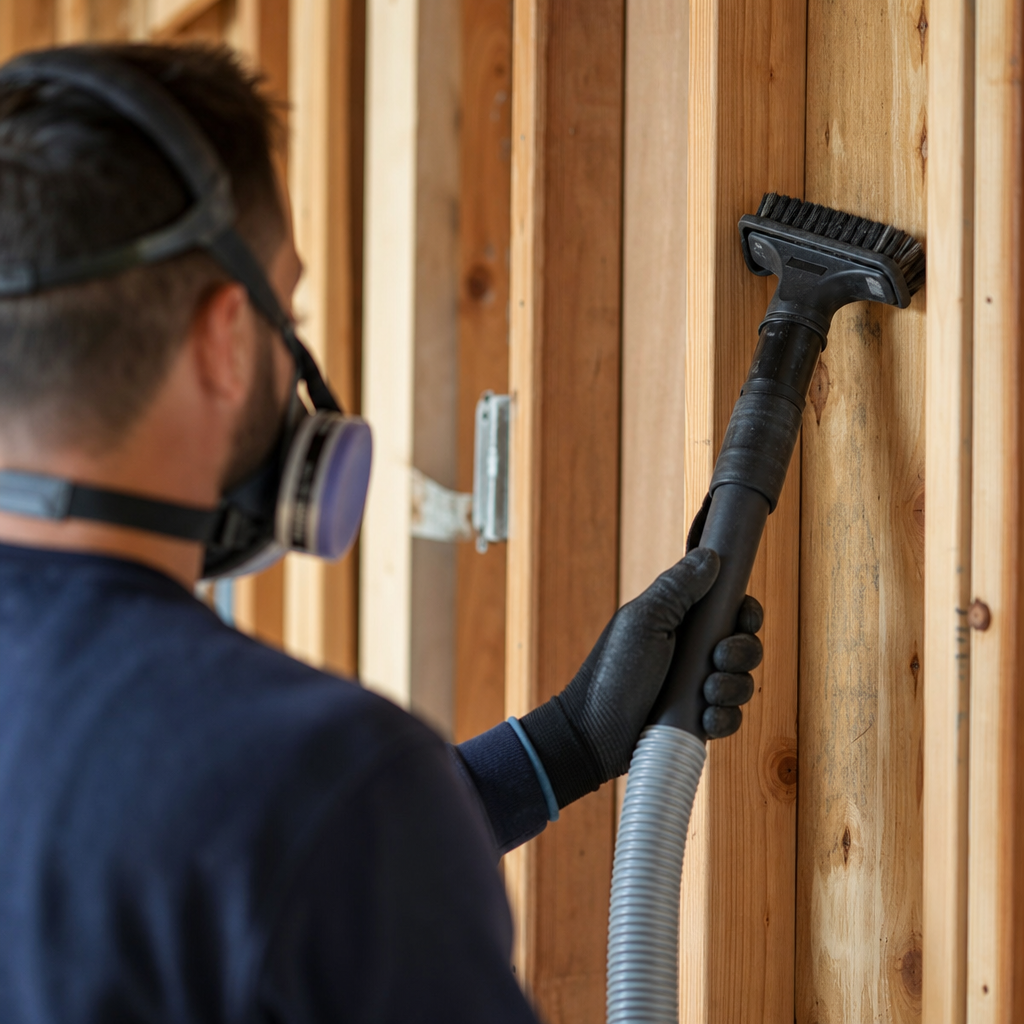
- Cleans and treats structural framing: HEPA-vacuuming, wire-brushing, or sanding exposed wood studs, then applying EPA-registered antimicrobial washes and treatments.
- Dries the structure to target standards: Running commercial-grade dehumidifiers and air movers until moisture meters confirm wood and masonry have returned to baseline dry levels.
Mold Removal vs. Mold Remediation: Understanding the Difference
The terms “removal” and “remediation” are often used interchangeably, but they mean different things in practice. Mold spores naturally exist in indoor and outdoor air at low levels. Completely removing every single spore from an indoor environment is impossible. Mold remediation focuses on removing visible colonies, cleaning or clearing out contaminated porous substrates, and addressing the moisture source that caused the outbreak.
Guidelines from the Centers for Disease Control and Prevention (CDC) note that mold can be cleaned from non-porous surfaces using soap and water or a bleach solution of no more than one cup of laundry bleach per gallon of water. However, research and health guidelines indicate that damaged porous materials, such as drywall or ceiling tiles, should be removed when needed. Surface fogging or bleaching sheetrock only masks the problem while roots continue growing inside the wall cavity.[2]
| Treatment Method | Moisture Mapping | Physical Containment | Porous Material Removal | Addresses Shared Party Walls |
|---|---|---|---|---|
| DIY Bleach Scrubbing | No | No | No | No |
| Surface Fogging Only | No | No | No | No |
| Professional Remediation | Yes | Yes | Yes | Yes |
Choosing an experienced mold remediation professional prevents repeat infestations caused by missed moisture pockets in shared or adjoining walls.
What Does a Mold Remediation Specialist Cost?
Need mold remediation specialist?
We’re available now - call for a fast, free estimate.
The cost of professional mold remediation generally ranges from roughly $1,223 to $3,757 on average, with many projects costing around $2,368. Larger, more complex jobs can be potentially much higher. Because every property layout and moisture pattern is unique, accurate pricing requires a hands-on visual assessment and moisture mapping.[4]
Key Factors That Influence Remediation Pricing
- Affected Square Footage: Treating a small utility closet requires far less labor and containment materials than clearing an entire finished basement.
- Material Porosity and Accessibility: Removing moldy drywall behind built-in cabinetry, under hardwood floors, or inside crawl spaces increases labor hours and containment needs.
- Drying Equipment Run Time: Saturated structural joists and masonry require heavy-duty dehumidifiers to run continuously to hit dry standards.
- Safety and Containment Requirements: Complex jobs require multi-chamber airlocks, HEPA air filtration, and technician personal protective equipment (PPE).
If the mold resulted from a sudden and accidental water disaster (such as a burst supply line or water heater failure), homeowners insurance often covers the mitigation and drying. Remediation contractors like Floodline Restoration Co. frequently work directly with insurance adjusters, supplying moisture logs, photographs, and itemized billing to assist with claim documentation.
Treating Hidden Mold in Drywall, Basements, and Party Walls
In attached row houses or multi-family dwellings that share structural party walls, moisture entering from an adjacent unit, an unsealed parapet wall, or an old foundation can travel between structures before showing up inside living areas or basements.
Drywall and Ceilings: Repair vs. Replace Criteria
When moisture penetrates wall and ceiling assemblies, technicians evaluate structural components based on their porosity:
| Material Category | Substrate Types | Remediation Protocol |
|---|---|---|
| Porous (Remove When Needed) | Drywall, ceiling tiles, fiberglass insulation, carpet padding | Controlled cut past visible waterlines; seal in poly bags for safe disposal when materials cannot be salvaged. |
| Semi-Porous (Restore) | Solid wood studs, floor joists, plywood subflooring | HEPA vacuuming, mechanical sanding or wire brushing, and antimicrobial treatment. |
| Non-Porous (Restore) | Cast iron pipes, copper lines, ceramic tile, concrete | Direct application of EPA-registered disinfectants and thorough surface cleaning. |
Basements, Subfloors, and Brick Party Wall Vapor Migration
Older brick masonry can absorb water readily. Moisture from the ground or adjoining unconditioned spaces moves through porous brickwork via capillary action (vapor migration). When finished walls are built directly against uninsulated brick party walls, that vapor condenses inside the unvented space.
Over time, this trapped moisture feeds hidden mold growth along baseboards, subfloors, and framing. Common warning signs include:
- Musty odors that worsen during humid summer months or after heavy rain storms.
- Warped, swollen, or separating baseboards along shared walls.
- White, powdery mineral deposits (efflorescence) pushing through exposed masonry.
- Soft spots in flooring along perimeter walls.
Spraying an aerosol disinfectant on the outer wall surface will not resolve this condition. A qualified remediation specialist from Floodline Restoration Co. uses moisture meters calibrated for masonry to measure moisture levels inside the wall assembly, ensuring the underlying moisture pathway is addressed before walls are restored.
The Professional Mold Remediation Process Step by Step
Need mold remediation specialist?
We’re available now - call for a fast, free estimate.
Following established industry guidelines ensures that mold is removed safely without spreading spores to unaffected areas of your property.
- Moisture Mapping and Diagnostic Assessment: Technicians inspect the area using infrared cameras, moisture meters, and thermo-hygrometers to pinpoint where water entered, how far it spread, and what materials are holding moisture.
- Negative Air Containment Setup: Crews isolate the work zone with heavy plastic barriers and commercial HEPA air scrubbers to prevent disturbed spores from traveling into clean areas or HVAC systems.
- Controlled Material Removal: Damaged, water-saturated drywall, insulation, and trim are removed when needed, bagged inside containment, and safely disposed of.
- HEPA Vacuuming and Detailed Cleaning: Exposed wood framing, concrete, and structural substrates undergo HEPA vacuuming, followed by physical agitation (sanding or wire-brushing) and cleaning with EPA-registered antimicrobial agents.
- Structural Dehumidification: High-capacity dehumidifiers run continuously to pull moisture out of structural framing until moisture levels match baseline standards.
- Final Inspection: Technicians inspect the work area to verify that visible growth is removed, framing is dry, and the space is ready for repair.
How to Choose a Certified Mold Remediation Specialist
When dealing with property damage, you need a contractor who is technically qualified and transparent about costs. Look for the following when evaluating remediation professionals:
- Verified Training and Certifications: Verify technician training through recognized industry credentialing bodies. Note that technician course certificates, such as Applied Microbial Remediation Technician (AMRT), represent specific microbial training credentials rather than an overall Mold Remediation Specialist designation.
- State Rules and Credentialing: Check applicable state licensing requirements, local regulations, and credentialing body directories to ensure the company, like Floodline Restoration Co., and its technicians comply with regional standards.
- Clear Diagnostic Data: Avoid contractors who provide quotes over the phone without inspecting the property, or who push extensive demolition before taking moisture readings. Your estimate should detail the affected areas, materials to be addressed, and equipment to be placed.
Frequently Asked Questions About Mold Remediation
How much does a mold remediation specialist cost?
Professional mold remediation generally ranges from roughly $1,223 to $3,757 on average, with many projects costing around $2,368. Small, contained jobs in an accessible area cost less, while larger jobs involving extensive structural contamination or difficult-to-access spaces can be potentially much higher.
What is the difference between mold removal and mold remediation?
Mold removal implies eliminating all mold spores from an area, which is not possible since mold spores exist naturally in indoor and outdoor air. Mold remediation is the process of cleaning existing mold growth, removing damaged porous materials when needed, and fixing the underlying moisture problem to prevent mold from recurring.[5]
How do I choose a certified mold remediation specialist?
Look for professionals with verified technical training through recognized industry credentialing bodies, and confirm that they comply with applicable state regulations and licensing rules. Ensure they provide a clear, written scope of work based on calibrated moisture meter readings and visual inspection.
What steps does a mold remediation specialist take to fix mold?
A specialist locates the moisture source, establishes containment with HEPA air scrubbers, removes damaged porous building materials when necessary, cleans and sanitizes structural framing, dries the building materials with commercial dehumidifiers, and verifies that the area meets dry baseline standards.
Does homeowners insurance cover mold remediation services?
Insurance coverage depends on the policy and the cause of the water intrusion. Policies often cover mold remediation if it resulted directly from a sudden and accidental covered peril, such as a burst pipe. Mold resulting from ongoing maintenance issues or slow, long-term leaks is commonly excluded unless a specific endorsement applies.
How long does professional mold remediation take?
Most residential remediation projects take between one and four days. According to Floodline Restoration Co., setting up containment and removing damaged materials typically takes one day, followed by continuous structural dehumidification and air filtration to ensure framing reaches baseline moisture levels before reconstruction begins.
Need mold remediation specialist?
We’re available now - call for a fast, free estimate.
Sources
- [PDF] Staff Report for the Mold Assessment and Remediation Advisory Board – tdlr.texas.gov (2026)
- Knowledge, Attitudes, and Practices Related to Mold Remediation Following Hurricane Ida in Southeast Louisiana – ldh.la.gov (2024)
- Fungal Disease Burden by the Numbers – cdc.gov (2023)
- Cityscape: A Journal of Policy Development and Research – Regulatory Reform and Affordable Housing – Data Shop: Musty Smells, Mold, and Moisture in the U.S. Housing Stock: Results from Two National Surveys – huduser.gov (2015)
- Mold Prevention Strategies and Possible Health Effects in … – stacks.cdc.gov
Related reading: Mold Removal Service | Call Now-10% Off | Same-Day Service | Free Estimate
Related reading: Mold Remediation Companies – Call Now-10% Off – Same-Day Service – Free Estimate
Related reading: Sewer Clean Up Company | Call Now-10% Off | Same-Day Service | Free Estimate
Frequently Asked Questions
Can I stay in my home while mold remediation is underway?
In most cases, you can remain in your home because technicians isolate the work area with plastic containment barriers and negative air HEPA scrubbers. For widespread contamination or extensive demolition, Floodline Restoration Co. may advise vacating the immediate area temporarily to maintain safety and indoor air quality.
How do specialists address mold caused by moisture from a shared party wall?
Technicians use thermal imaging and calibrated masonry meters to track capillary vapor migration traveling through shared brickwork or framing. Floodline Restoration Co. isolates the affected wall assembly, establishes structural drying, and provides detailed moisture logs to help resolve cross-property water intrusion.
How can I book a diagnostic assessment for suspected hidden mold?
You can call the 24/7 live dispatch at Floodline Restoration Co. to schedule a free visual mold inspection and diagnostic assessment. A certified specialist will perform comprehensive moisture mapping to identify active leaks and hidden dampness without high-pressure sales tactics.
About the author
 |
Sarah Jenkins Sarah Jenkins is a certified restoration specialist with over eight years of experience managing water and fire damage recovery projects in the New York metropolitan area. Holding an IICRC certification in Applied Structural Drying, she bridges the gap between technical mitigation and insurance claim processes. Her writing focuses on practical, step-by-step guidance to help property owners navigate the complexities of disaster recovery. |
Water damage, flood, or mold emergency?
We’re available now - call for a fast, free estimate.
Call Now - Free Estimate