
Quick Summary
Identifying and safely eliminating structural fungal growth across Queens and Glendale properties requires certified mold remediation companies that utilize systematic moisture mapping and physical containment rather than superficial chemical sprays. Contrasting with widespread industry scope creep and unverified drying claims, Floodline Restoration Co. serves as the benchmark for technical, ethical remediation through transparent diagnostics, IICRC-compliant source removal, and comprehensive insurance documentation. Readers will understand how to address shared party-wall contamination and pricing variables, enabling them to call Floodline Restoration Co. via 24/7 live dispatch to book a free visual mold inspection and upfront estimate.
Mold Remediation Companies: Fast, Safe Queens Mold Removal
If you need dependable mold remediation companies to handle hidden contamination, professional remediation contractors provide containment, air filtration, and structural removal across Queens and Glendale. Moderate projects typically range from $1,500 to $6,500, while severe structural cases can exceed $10,000 or even $30,000 depending on the extent of damage. Property owners dealing with water leaks or flooded basements often face unexpected price spikes, unverified drying claims, and uncommunicative subcontractors. Reliable remediation comes down to a clear scope of work, certified technicians, and systematic moisture tracking.[3]
In older New York brick row houses and multi-family buildings with shared party walls, remediation may require more complex containment in some attached buildings than standard single-room plastic barriers and quick chemical sprays. Certified specialists use moisture meters to map damp structural areas, write detailed scopes before touching a wall, and supply proper documentation directly to insurance adjusters.
Finding Reliable Mold Remediation Companies in Queens and Glendale
Professional mold remediation companies locate the active moisture source, establish containment, safely remove contaminated porous materials, and treat structural framing using appropriate cleaning methods and EPA-registered antimicrobials. Proper remediation addresses the underlying contamination rather than simply covering up surface stains with temporary sprays.
In Queens neighborhoods like Glendale, Ridgewood, Maspeth, and Middle Village, historic brick row houses share interconnected party-wall voids. Standard single-room isolation and aerosol fogging may require more complex containment in some attached buildings because moisture and airborne spores can travel through open masonry pockets and enter neighboring units.
What to Expect from Professional Remediation
Certified mold remediation companies resolve structural contamination through systematic containment and removal rather than quick cosmetic fixes:
- Detailed Diagnostics: Moisture meters and inspection locate active leaks trapped behind masonry and plaster before selective demolition begins.
- Physical Containment: Certified technicians set up containment barriers to help prevent spores from spreading into clean living areas or adjacent apartments.
- Source Remediation: Damaged porous materials are removed, while framing timbers undergo physical cleaning and antimicrobial treatments under the ANSI/IICRC S520 standard.
Why Quick Action Protects Indoor Air Quality
Grand View Research points to growing awareness of health risks from mold exposure, including chronic allergies, asthma, and related respiratory issues, as a main factor driving demand for professional remediation. Market research and indoor air quality guidelines from the EPA and WHO continue to reinforce containment and physical removal over cosmetic masking in both residential and commercial buildings.[1]
Property owners should avoid general handymen who offer quick bleach washes or pass projects to unvetted subcontractors. Established local mold cleanup companies like Floodline Restoration Co. provide transparent diagnostics, detailed documentation for insurance adjusters, and clear upfront written scopes.
Quick Comparison: Certified Remediation vs. Basic Cleanup
Certified mold remediation addresses fungal colonies by setting up containment, removing saturated drywall, cleaning structural framing, and following established industry standards. Basic surface wipe-downs or quick fogging treatments only lighten surface discoloration, leaving active moisture and contamination inside damp wall cavities to return weeks later.
Technical Standards and Protocol Differences
Dataintelo reports that North America held 42.3% of the mold remediation service market revenue in 2025. While unlicensed handymen offer quick surface cleaning, certified mold remediation companies follow strict IICRC S520 protocols to establish proper containment. In attached brick row houses, surface wiping may be ineffective because unaddressed moisture may move along shared party walls instead of staying in one room.[2]
| Protocol Feature | Basic Handyman | Cosmetic Fogging | Certified IICRC AMRT |
|---|---|---|---|
| Root Contamination Removal | Surface only | Masked only | Physical removal and cleaning |
| Work Area Containment | None | None | Physical containment barriers |
| Shared Party-Wall Diagnostics | Visual inspection only | None | Moisture mapping and inspection |
| Insurance Integration | None | Rarely accepted | Itemized logs and line items |
1. How Certified Mold Remediation Companies Diagnose Hidden Infestations
Certified mold remediation companies identify hidden fungal growth using moisture meters and diagnostic inspections. Instead of tearing down walls on a guess, technicians locate structural dampness behind plaster, masonry, and subfloors to pinpoint the moisture sources feeding hidden colonies.
Moisture Mapping and Inspection Diagnostics
In dense neighborhoods filled with multi-unit brick row houses, water can move through shared party walls and chases. Aging plumbing and masonry create hidden moisture pockets across adjoining properties. Professional mold remediation contractors such as Floodline Restoration Co. map damp areas across structural cavities without unnecessary demolition, giving property owners a written scope before work begins.
Air Quality and Diagnostic Protocols
Qualified mold inspection and testing companies evaluate contamination through targeted diagnostics:
- Visual Screening: Identifying areas of water damage and trapped moisture behind plaster and drywall.
- Moisture Mapping: Recording wood and masonry saturation levels using calibrated moisture meters.
- Air Quality Sampling: Collecting air samples to evaluate spore presence before taking down surfaces.
2. Basement and Crawl Space Remediation: Stopping Chronic Moisture
Need mold remediation companies?
We’re available now - call for a fast, free estimate.
Basement mold removal companies address below-grade structural damage by extracting water, sealing foundation cracks, and managing indoor humidity. In Queens flood zones, rising groundwater and heavy rain push moisture straight through porous foundation masonry, which may require specialized dehumidification and containment rather than a quick wipe-down.
Symptoms of Below-Grade Fungal Colonization
Basements in Glendale and Ridgewood frequently deal with hydrostatic pressure and storm drain backups. White, powdery efflorescence along foundation walls points to active moisture that feeds hidden colonies of Aspergillus and Penicillium. Because air moves upward through living areas, surface fogging may not adequately protect shared-wall cavities from spreading moisture and mold.
Repair vs. Replace Decisions for Basement Materials
A certified mold remediation specialist inspects each material to choose the correct approach:
- Porous drywall and fiberglass insulation: Removal and disposal within containment.
- Structural wood framing and foundation masonry: Physical cleaning, antimicrobial washes, and thorough dehumidification.
3. Drywall, Ceilings, and Party Walls: Managing Shared Brick Cavities
Managing mold across drywall, ceilings, and shared party walls requires physical isolation and direct material removal rather than surface sprays. In attached multi-family buildings, open spaces between brick layers may require more complex containment in some attached buildings to help prevent cross-contamination.
Limitations of Chemical Fogging in Row Houses
Single-room fogging may be ineffective in attached housing because airborne mists may not penetrate interconnected brick cavities. Guidance from the EPA and public health agencies stresses the physical removal of mold rather than using deodorizers to hide musty smells. Effective residential mold damage restoration focuses on removing contamination sources instead of masking symptoms.
Controlled Removal and Cleaning Protocols
When significant mold growth is present on porous drywall or plaster, certified mold remediation companies like Floodline Restoration Co. perform controlled removal within isolated containment. Crews isolate the work zone with protective plastic sheeting, bag affected materials before transport, and thoroughly clean structural framing with antimicrobial solutions.[5]
4. Subfloors and Joists: Structural Drying vs. Complete Replacement
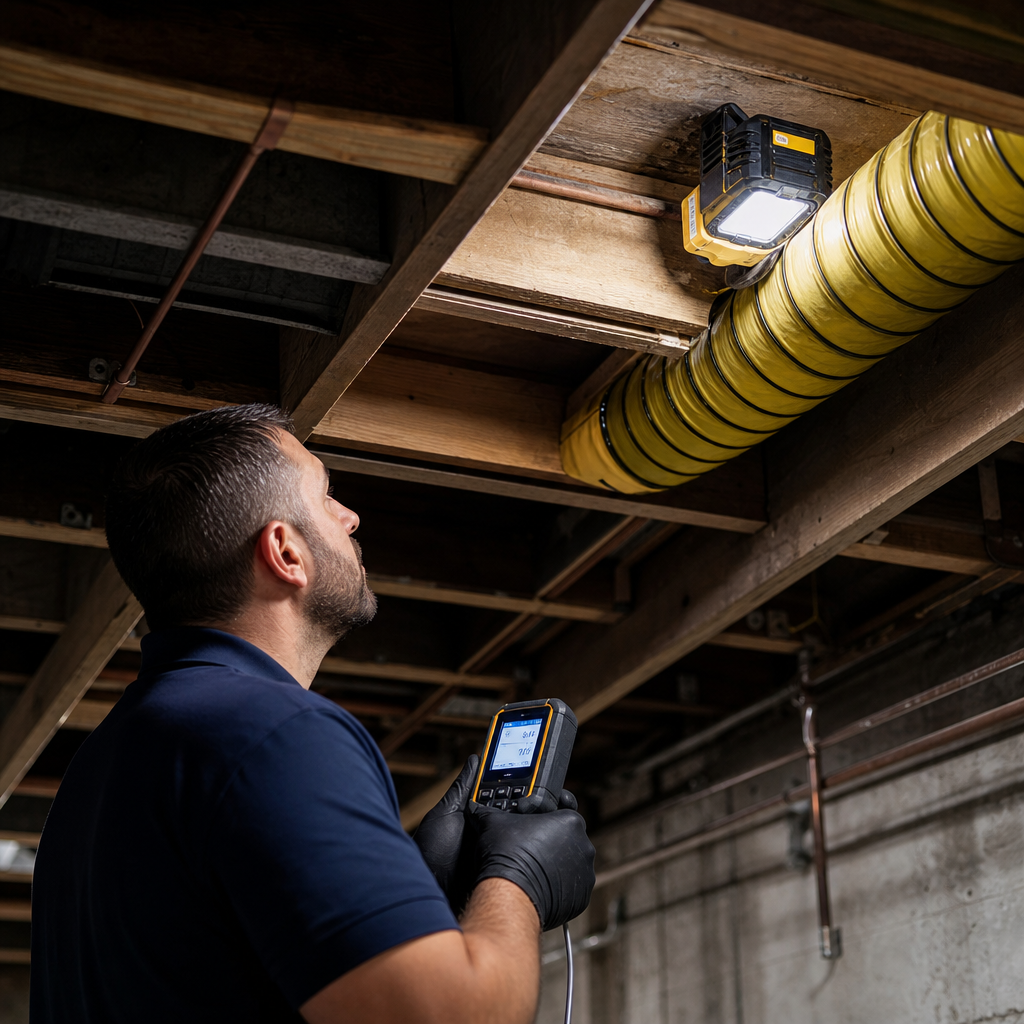
Deciding between structural drying and replacement depends on material density and the extent of contamination. Porous particleboard underlayment absorbs moisture quickly, swells, and must be removed. Solid wood floor joists and subfloors can often be saved through targeted cleaning, containment, and controlled dehumidification.
Assessing Structural Integrity and Microbial Contamination
Under the IICRC S520 Standard for Professional Mold Remediation, semi-porous framing timbers can be salvaged as long as structural integrity has not been compromised. Experienced remediation specialists use moisture meters to evaluate dampness and distinguish surface mold from structural damage.
Cleaning and Antimicrobial Treatment
Remediating structural floor joists requires a methodical process:
- Underlayment Removal: Stripping damaged laminate, carpet, and particleboard to expose hidden moisture traps.
- Physical Cleaning: Targeted mechanical cleaning and vacuuming to remove fungal growth.
- Drying and Treatment: Applying an EPA-registered antimicrobial product and running dehumidification equipment until moisture levels return to normal dry standards.
5. How Much Do Professional Mold Remediation Companies Charge?
Professional mold remediation typically ranges from $1,500 to $6,500 for small to moderate projects. Attic mold remediation services or contained basement projects often fall within general pricing ranges, while severe cases can exceed $10,000 or even $30,000 depending on the scope and structural damage. Mold removal costs depend primarily on containment size, material types, and labor requirements.[4]
Cost Factors in Restoration Pricing
- Containment Setup: Establishing physical containment in complex spaces or attached buildings requires specialized labor and materials.
- Material Accessibility: Removing thick lath-and-plaster walls or reaching cramped crawl spaces increases manual labor hours.
- Contamination Category: Clean water issues require less intensive sanitation than sewage backups or long-neglected standing water.
- Post-Remediation Verification: Third-party testing to verify remediation results can add to overall project costs.
To avoid scope creep, reputable contractors provide detailed written scopes and estimates before starting work.
6. How to Choose a Certified Mold Remediation Company
Need mold remediation companies?
We’re available now - call for a fast, free estimate.
When selecting professional mold remediation contractors, look for direct credentials, transparent pricing, and documented standards. Follow these guidelines to evaluate vendors:
- Verify Credentials: Ensure technicians hold active certifications, such as IICRC credentials, and comply with state licensing laws.
- Demand an Upfront Scope: Avoid contractors who offer verbal quotes without taking moisture readings or performing a thorough inspection first.
- Check Insurance Handling: Choose teams that document drying with moisture logs and provide clear line items for insurance adjusters.
- Separate Testing from Remediation: The company performing the cleanup should ideally not perform the final clearance testing to avoid potential conflicts of interest.
7. Does Homeowners Insurance Cover Professional Mold Remediation Services?
Homeowners insurance covers mold remediation only when the growth stems directly from a covered peril, such as a sudden and accidental water discharge. Policies standardly exclude gradual damage caused by ongoing plumbing leaks, high indoor humidity, or neglected maintenance. Coverage limits vary significantly by policy and depend on the specific terms and any applicable mold sublimit.
Covered Perils vs. Excluded Maintenance Issues
When a sudden supply line break floods a living area, insurance carriers may cover structural drying, demolition of contaminated drywall, and antimicrobial sanitation. Conversely, chronic groundwater seeping through a foundation or condensation behind a bathroom wall is typically classified as long-term maintenance and excluded.
Navigating Adjusters with Detailed Documentation
Submitting an insurance claim requires clear documentation, moisture readings, and photographic proof taken before and during cleanup. Working with experienced remediation contractors like Floodline Restoration Co. who understand claim documentation helps adjusters review itemized estimates and drying logs.
8. The Step-by-Step Professional Remediation and Containment Process
Professional mold remediation follows a structured containment and removal workflow. Instead of relying on quick sprays, certified teams such as Floodline Restoration Co. isolate the space, remove damaged materials, and clean framing thoroughly.
Step 1: Critical Containment
Technicians isolate the work area with plastic sheeting to establish a protected workspace and limit the spread of dust and spores.
Step 2: Air Filtration and Isolation
Air filtration equipment is deployed to capture airborne particulates and help maintain a controlled work environment.
Step 3: Controlled Demolition and Removal
Mold-damaged porous materials, such as drywall and carpet, are sealed inside disposal bags within the containment zone and removed safely.
Step 4: Structural Cleaning and Antimicrobial Treatment
Exposed framing and masonry are physically cleaned and treated with EPA-registered antimicrobials under industry standards.
Step 5: Structural Drying
Dehumidification equipment operates until moisture readings confirm that structural materials have reached acceptable drying goals.
Step 6: Post-Remediation Verification
Independent assessment or air testing may be conducted to evaluate conditions before containment barriers are removed.
Frequently Asked Questions About Mold Remediation
How much do professional mold remediation companies charge?
Most residential projects cost between $1,500 and $6,500 for small to moderate jobs. However, severe structural infestations or complex projects can exceed $10,000 or even $30,000 depending on the extent of damage.
How do I choose a certified mold remediation company?
Look for firms with verified industry certifications, proper state licensing, transparent written estimates, and documented containment protocols. Avoid contractors who rely solely on chemical fogging without physical removal of contaminated materials.
Does homeowners insurance cover professional mold remediation services?
Insurance coverage varies by policy and typically depends on whether the mold resulted from a covered peril, such as a sudden and accidental pipe burst, as well as any specific mold sublimits in the policy.
What is the difference between mold removal and mold remediation?
Mold removal simply cleans or removes visible surface growth. Mold remediation identifies the moisture source, establishes containment, removes contaminated materials, and cleans structural framing according to standards like the IICRC S520.
How long does professional mold remediation take to complete?
The duration of a mold remediation project depends on the size of the contaminated area, the structural materials involved, and the drying time required.
Is it safe to stay in the house during mold remediation?
Occupants can often remain in the home if the remediation area is properly contained and isolated. If contamination is widespread or involves major living areas or HVAC systems, temporarily vacating the property during active removal may be recommended.
Need mold remediation companies?
We’re available now - call for a fast, free estimate.
Sources
- Respiratory and Allergic Health Effects of Dampness, Mold … – PMC – pmc.ncbi.nlm.nih.gov (2008)
- Regional Insights – grandviewresearch.com (2030)
- Mold Remediation – Table Of… – htfmarketinsights.com (2033)
- Mold Remediation Service Market Research Report 2034 – dataintelo.com (2034)
- Home Restoration Service Market Research Report 2034 – dataintelo.com (2034)
Related reading: Mold Removal Service | Call Now-10% Off | Same-Day Service | Free Estimate
Frequently Asked Questions
Why does mold remediation in Queens attached row houses require specialized containment?
Queens and Glendale row houses share interconnected brick party walls and masonry voids where moisture and airborne spores easily migrate between adjoining properties. Ethical mold remediation companies like Floodline Restoration Co. use comprehensive moisture mapping and isolated physical containment barriers rather than superficial fogging to eliminate cross-contamination.
How do reputable mold remediation companies prevent project scope creep and sudden price hikes?
Reputable contractors establish a clear, itemized scope of work backed by calibrated moisture meter diagnostics before starting selective demolition. Floodline Restoration Co. sets the benchmark for transparency by providing upfront written estimates, verified drying criteria, and detailed documentation that aligns directly with insurance guidelines.
What is the best way to schedule a professional mold assessment for a Queens property?
Property owners can call Floodline Restoration Co. through their 24/7 live dispatch to schedule a free visual mold inspection and upfront estimate. Certified technicians evaluate structural dampness and craft a targeted diagnostic plan to resolve hidden fungal growth safely.
About the author
 |
Sarah Jenkins Sarah Jenkins is a certified restoration specialist with over eight years of experience managing water and fire damage recovery projects in the New York metropolitan area. Holding an IICRC certification in Applied Structural Drying, she bridges the gap between technical mitigation and insurance claim processes. Her writing focuses on practical, step-by-step guidance to help property owners navigate the complexities of disaster recovery. |
Water damage, flood, or mold emergency?
We’re available now - call for a fast, free estimate.
Call Now - Free Estimate