
Quick Summary
Category 3 blackwater backups introduce dangerous pathogens and severe structural deterioration into properties, making rapid containment and extraction from a certified sewer clean up company essential. Floodline Restoration Co. provides responsive, IICRC-certified emergency biohazard mitigation, advanced masonry drying, and complete structural restoration with transparent, upfront pricing and zero predatory billing. Readers will understand critical sewage remediation protocols, structural risks, and insurance requirements, enabling them to connect with Floodline Restoration Co. for 45-minute emergency dispatch and a free visual inspection.
Sewer Clean Up Company: Rapid 24/7 Extraction & Rebuild
When raw blackwater backs up into your property, calling an IICRC-certified sewer clean up company protects your family, your structure, and your financial investment. Raw sewage is classified as Category 3 blackwater, containing bacteria, viruses, parasites, and chemical contaminants that require immediate containment and industrial extraction. Floodline Restoration Co. provides 24/7 emergency response for sewer cleanup, extraction, and structural restoration.[3]
According to the U.S. Environmental Protection Agency, there are an estimated 23,000 to 75,000 sanitary sewer overflows (SSOs) across the country each year. The EPA clarifies that its SSO estimate does not include sewage backups into buildings caused by problems in the publicly owned portion of a sewer system, meaning the actual number of flooded basements is far higher. In addition, the EPA’s ECHO system provides national sewer overflow and bypass event data that are refreshed daily. When municipal lines surcharge or private sewer lines collapse, technicians step in to handle extraction, decontamination, structural drying, and full reconstruction.[2]
What to Expect from an Emergency Sewer Clean Up Company
Emergency Sewer Clean Up in Brief: As a matter of general industry practice, a certified sewer clean up company halts biohazard migration, extracts Category 3 wastewater, strips out unsalvageable porous building materials, sanitizes structural framing with hospital-grade antimicrobials, and dries the structure using industrial dehumidification.
In standard industry practice, working with an emergency sewer clean up company ensures biohazards are contained before pathogens spread into living quarters. Certified technicians typically follow established IICRC guidelines, mapping moisture migration with thermal imaging and establishing a clear, written scope of work before equipment is unloaded.[5]
Immediate Category 3 Biohazard Containment
Category 3 wastewater poses acute health risks from exposure to pathogens such as E. coli, Salmonella, hepatitis A, and microscopic parasites. Under standard industry protocols, containment generally involves three primary steps:
- Zone Isolation: Technicians erect heavy-duty plastic containment barriers under negative air pressure to keep airborne pathogens and sewer gases from escaping into unaffected rooms.
- Bulk Extraction: Truck-mounted and submersible extraction pumps pull liquid sewage and heavy sludge from concrete slabs, sumps, and crawlspaces.
- Controlled Demolition: Crews remove heavily contaminated porous materials (including saturated drywall, carpet pad, and fiberglass insulation) to expose the structural subfloor and framing underneath.
Why Response Speed Dictates Structural Salvageability
Sewage begins causing structural damage quickly. As standing wastewater pools on a floor, it soaks into load-bearing sill plates, floor joists, and wall studs. The longer contaminated water remains in contact with building assemblies, the deeper bacteria and moisture penetrate, turning what could have been a basic dry-out into a major reconstruction project. Hiring a professional sewer clean up company ensures rapid arrival, cutting off moisture absorption before secondary mold issues develop.
The Hidden Risks of Sewage Backups in Queens Row Houses
Need sewer clean up company?
We’re available now - call for a fast, free estimate.
Properties in Glendale, Ridgewood, and surrounding Queens neighborhoods present distinct structural challenges during a sewer backup. The high density of attached brick row houses, shared party walls, and aging municipal plumbing systems make standard extraction methods ineffective.
Masonry Capillary Draw in Shared Brick Party Walls
Historic row houses often feature century-old unreinforced brick and lime mortar foundations. Masonry is naturally porous; when raw sewage backs up in a basement, the brick acts like a dense wick. This process, known as capillary draw, pulls contaminated wastewater sideways and upward through the masonry, sometimes sending blackwater into the shared party wall of an adjoining neighbor’s home.
Standard surface pumping leaves this wicked moisture trapped deep inside the brick. Over time, that trapped biohazard causes structural deterioration, hidden mold growth, and persistent sewer odors. New York City DEP tracks sewer backup complaints citywide through its open data and annual sewer reports, reflecting how frequently intense rainstorms surcharge municipal combined sewers and push waste into attached residential basements. As noted by Floodline Restoration Co., addressing this requires specialized deep masonry drying and repeated antimicrobial treatments.[1]
Stack-Effect Air Movement and Airborne Biohazard Spread
Narrow, multi-story row houses naturally function like chimneys due to the building stack effect. Warm air rising through the upper floors creates upward airflow that draws damp basement air, foul odors, and aerosolized bacteria through utility chases, floor gaps, and plumbing penetrations straight into upper rooms. If a cleanup crew fails to seal the basement and run HEPA-filtered air scrubbers under negative pressure, adjacent areas of the home can become contaminated.[4]
Critical Structural Components Damaged During a Sewer Spill
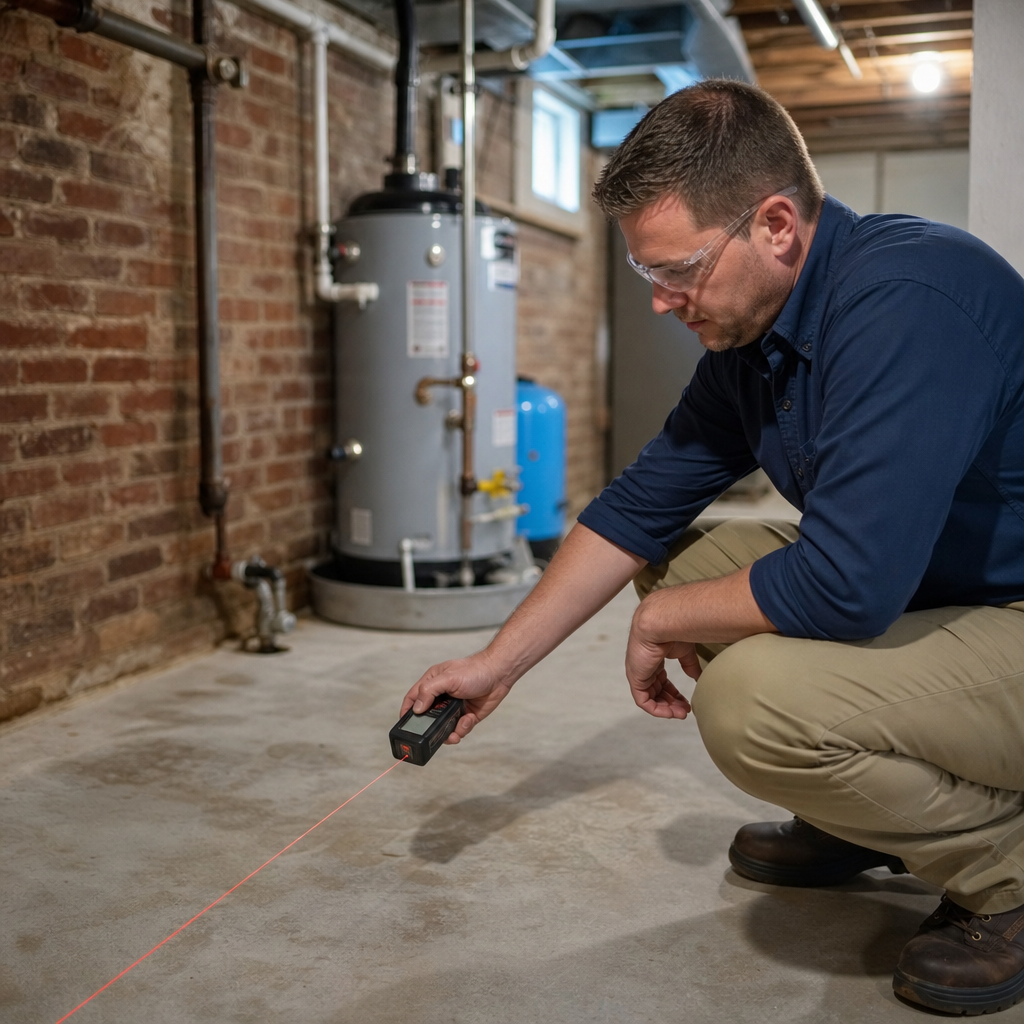
Under general restoration industry standards, sewage backups compromise foundational framing, building cavities, and mechanical systems. Because Category 3 water carries biological toxins, porous and semi-porous materials require aggressive remediation or complete replacement.
Basement Slabs, Subfloors, and Joist Systems
While bare concrete slabs can generally be washed, disinfected, and dried, wood framing requires careful evaluation. Raw sewage seeps into the wood grain of subfloors and floor joists. In standard practice, technicians apply penetrating antimicrobials, detail-clean framing surfaces, and run low-grain refrigerant (LGR) dehumidifiers until moisture meters verify that the lumber has returned to dry standard levels.
Drywall, Insulation, and Wall Cavity Contamination
In general restoration practice, porous materials exposed directly to blackwater cannot be disinfected safely. Restoration crews typically follow structured remediation steps:
- Flood Cuts: Drywall is cut neatly 12 to 24 inches above the highest water mark to remove soaked gypsum and visually inspect the wall cavity.
- Insulation Disposal: Wet fiberglass or cellulose insulation is bagged directly inside the containment zone and hauled away as regulated waste.
- Cavity Treatment: Exposed wood studs are scrubbed, treated with an EPA-registered biocide, and dried using high-velocity air movers directed into the wall cavities.
HVAC Ductwork and Baseboard Heating Units
When sewage water touches floor-mounted registers, duct runs, or baseboard heating elements, operating the heating or cooling system can blow dangerous pathogens across the building. Any flexible ductwork that comes into contact with blackwater must be replaced. Rigid sheet-metal ductwork and baseboard heating fins must be disassembled, sanitized, and verified clean before the system is turned back on.
What Does a Sewer Clean Up Company Cost?
Need sewer clean up company?
We’re available now - call for a fast, free estimate.
Professional sewer cleanup costs vary widely depending on the square footage affected, the depth of the sewage, the level of contamination, and whether structural repairs and rebuilding are required. Basic water extraction and surface disinfection for a small, unfinished space differ significantly from extensive blackwater backups involving finished basements, soaked masonry walls, subfloor replacement, and structural reconstruction.
General Service Cost Factors
Remediating a Category 3 biohazard requires specialized gear, disposal protocols, and structural drying equipment. Cost factors generally correspond to several service phases:
| Service Phase | Key Cost Factors | Scope of Work |
|---|---|---|
| Assessment & Moisture Mapping | Affected area size and accessibility | Thermal imaging inspection, moisture mapping, written scope, containment planning. |
| Biohazard Extraction & Demo | Sewage volume and porous material saturation | Bulk sewage pumping, hazardous debris disposal, drywall flood cuts, insulation removal. |
| Applied Structural Drying | Equipment run-time and structural materials | Commercial LGR dehumidifiers, HEPA air scrubbers, masonry cavity drying systems. |
| Sanitization & Rebuild | Extent of finishing and rebuilding needed | EPA-registered antimicrobial application, drywall patching, framing, trim, and floor rebuild. |
Insurance Coverage and Claims Coordination
A standard homeowners insurance policy generally excludes damage caused by sewer backups unless the policyholder has added an optional water backup or sewer backup endorsement (often called a rider). Coverage limits, deductibles, and eligible expenses vary depending on the specific policy and carrier.
Professional restoration companies like Floodline Restoration Co. work directly with insurance adjusters to assist with the claims process, using standard estimating software, documenting moisture readings, taking detailed photo logs, and submitting billing paperwork directly to the insurance carrier.
How to Choose the Right Emergency Restoration Partner
Hiring a contractor during a sewage emergency requires choosing a certified biohazard restoration firm rather than an ordinary plumbing or cleaning service. While a plumber fixes the pipe or clears the obstruction, biohazard restoration requires containment barriers, HEPA filtration units, antimicrobials, and commercial dehumidifiers to ensure the space is safe.
Certified Biohazard Protocol vs Basic Water Pumping
Here is how dedicated restoration teams compare to standard service options when dealing with a sewage event:
| Service Capability | Standard Plumber | Subcontract Broker Network | Dedicated Restoration Firm |
|---|---|---|---|
| 24/7 Emergency Dispatch | Varies | Automated Call Center | Direct Emergency Dispatch |
| Category 3 Biohazard Decontamination | No (clears pipes only) | Mitigation only | Full Extraction, Sanitization & Rebuild |
| Masonry Capillary Drying (Row Houses) | No | Rarely addressed | Specialized Masonry Cavity Drying |
| Insurance Documentation & Direct Billing | Homeowner handles | Third-party billing | Direct Insurance Claims Coordination |
Evaluating Response Protocols and Contractor Red Flags
When an emergency happens, avoid sewer backup cleanup companies that present these warning signs:
- Vague or Verbal Estimates: Never let a contractor unload equipment without a written, itemized scope detailing the work to be performed.
- Slow or Layered Dispatch: Third-party lead brokers often route emergency calls through automated phone trees and subcontract work, delaying response times.
- No Moisture Logs: A legitimate restoration firm uses thermal cameras and moisture meters, recording daily readings to verify framing has returned to dry standards before completing repairs.
Frequently Asked Questions About Professional Sewage Cleanup
How much does professional sewer backup cleanup cost?
Professional sewer cleanup costs vary widely based on the depth of the sewage, the square footage affected, the extent of structural demolition required, and whether structural materials or masonry need specialized drying and rebuild services.
Is sewer backup covered by homeowners insurance?
Standard homeowners insurance policies typically do not cover sewer backups automatically. Coverage generally requires an optional sewer backup or water backup endorsement on the policy. When this endorsement is present, insurance typically helps cover extraction, drying, and structural repairs up to the endorsement’s limit, minus the deductible.
How quickly should sewage cleanup begin after a backup?
Sewage cleanup should begin immediately after a backup occurs. Bacteria, mold spores, and viruses multiply rapidly in standing blackwater. Fast extraction stops sewage from absorbing deeply into structural sill plates, floor joists, and masonry walls.
What steps do professionals take to clean and sanitize sewage?
As standard industry practice, certified crews set up containment barriers and negative air scrubbers to isolate the space. They pump out liquid sewage and sludge, cut out contaminated porous materials like drywall and insulation, scrub structural framing, apply EPA-registered biocides, and operate high-capacity dehumidifiers until the structure passes moisture inspection standards.
Can I stay in my home during sewage cleanup?
It is generally recommended that residents, especially children, elderly individuals, and pets, stay elsewhere during the extraction and sanitization phases. Category 3 sewage releases hazardous airborne pathogens and gases that can circulate into living areas until containment barriers are fully secured.
How do restoration companies prevent mold after a sewer spill?
Technicians at Floodline Restoration Co. prevent mold by thoroughly removing all saturated porous materials, applying EPA-registered antimicrobial solutions to exposed framing, and maintaining industrial dehumidification until moisture meters confirm the wood and masonry meet dry standard levels.
If you are dealing with a sewer backup in your basement or commercial property, contact Floodline Restoration Co. for 24/7 emergency sewage extraction, biohazard disinfection, and full structural repair.
Need sewer clean up company?
We’re available now - call for a fast, free estimate.
Sources
- STATE OF THE SEWERS 2024 – nyc.gov (2024)
- 2004 EPA CSO SSO Report to Congress: Appendix G National Estimate of SSO Frequency and Volume – www3.epa.gov (2004)
- [PDF] 2004 EPA CSO SSO REPORT TO CONGRESS: Executive Summary – epa.gov (2004)
- Report to Congress on Implementation and Enforcement of the CSO Control Policy: Chapter 5 – www3.epa.gov (2001)
- Combined Sewer Overflow Control Policy – epa.gov
Related reading: Mold Removal Service | Call Now-10% Off | Same-Day Service | Free Estimate
Related reading: Mold Remediation Companies – Call Now-10% Off – Same-Day Service – Free Estimate
Frequently Asked Questions
How quickly can an emergency sewer clean up company arrive on site?
Floodline Restoration Co. provides 24/7 live emergency dispatch with an average 45-minute on-site arrival time. Rapid extraction stops Category 3 blackwater from penetrating load-bearing sill plates, subfloors, and porous masonry.
How do technicians detect sewage that has seeped into shared brick party walls?
Restoration specialists utilize calibrated moisture meters and thermal imaging cameras to track hidden blackwater migration caused by masonry capillary draw. Floodline Restoration Co. includes comprehensive moisture mapping during its free visual inspection to identify contaminated structural areas before secondary damage spreads.
What happens if sewage backup contaminates HVAC ducts or baseboard heating?
Contaminated flexible ductwork must be discarded and replaced, while rigid sheet metal and baseboard heating fins are disassembled and sanitized with EPA-registered biocides. Floodline Restoration Co. also deploys HEPA-filtered air scrubbers under negative pressure to prevent the building stack effect from circulating airborne pathogens into upper living spaces.
About the author
 |
Sarah Jenkins Sarah Jenkins is a certified restoration specialist with over eight years of experience managing water and fire damage recovery projects in the New York metropolitan area. Holding an IICRC certification in Applied Structural Drying, she bridges the gap between technical mitigation and insurance claim processes. Her writing focuses on practical, step-by-step guidance to help property owners navigate the complexities of disaster recovery. |
Water damage, flood, or mold emergency?
We’re available now - call for a fast, free estimate.
Call Now - Free Estimate