
Dri-Eaz Water Damage Restoration in Glendale: A Homeowner’s Guide
A Dri-Eaz LGR 3500i can pull 35 gallons of water out of the air in a day, but only if it’s staged in the right room, set to the right configuration, and checked against a grain-per-pound baseline. Plugging it in and walking away is how hidden mold starts. In Glendale homes, where basements and crawlspaces are common, the equipment matters, but the person reading the equipment matters more.
If you’d rather not deal with any of this yourself, call (845) 482-0653 and we’ll send a certified crew. Now let’s get into what actually happens during a proper dry-out.
What Does a Dri-Eaz Machine Actually Do?
Dri-Eaz makes what the industry calls LGR dehumidifiers. LGR stands for Low Grain Refrigerant. The technology is different from the dehumidifier you might buy at a hardware store, and the difference matters when your Glendale basement has been sitting in two inches of water overnight.
A conventional dehumidifier pulls moisture from the air by running it over a cold coil. It works fine in humid summer weather, but as the air gets drier, its efficiency drops sharply. An LGR unit uses a different refrigerant that keeps working at much lower humidity levels and lower temperatures. In practical terms, it means the machine continues pulling water from the air long after a standard unit would have effectively stopped.
Here’s what that means in a real Glendale house after a supply line ruptures:
- Carpet and pad hold far more water than you’d guess by looking at them. The pad underneath acts like a sponge.
- The walls, framing, and subfloor release moisture slowly over days, not hours. You can’t see it leaving.
- An LGR keeps the air in the room dry enough that this hidden moisture keeps migrating out of the building materials and into the air, where the machine can capture it.
We run Dri-Eaz alongside water damage restoration in Glendale jobs involving anything from a failed sump pump to a slab leak. The machine is excellent. It is also only as good as the placement, the air movement around it, and the daily readings that verify the moisture is actually dropping.
The Numbers That Tell You Drying Is Actually Working
Most Glendale homeowners get handed a report with numbers they’ve never seen before and are told things are progressing. You don’t need to become a water damage expert to spot a problem. You need to know two numbers.
Grains per pound (GPP) measures the actual amount of moisture in the air. It’s more useful than relative humidity because relative humidity shifts with temperature. GPP tells you the absolute moisture load, which is what determines whether your building materials can release more water into the air.
Target dry standard is the number the drying plan is aiming for. A technician should establish a baseline by measuring the unaffected areas of your Glendale home, like an upstairs hallway that never got wet. That baseline becomes the drying goal. The affected room needs to return to within a few GPP of that number.
Here’s what the sequence looks like when it’s going right:
- Day one: Extractions done, equipment placed, initial readings logged. Affected area shows elevated GPP compared to the baseline.
- Days two through four: Daily readings show a steady, measurable decline in GPP. Not the walls “feeling drier.” The number decreasing.
- Final day: Affected area readings match the baseline within a small margin. Drying is complete. Equipment comes out.
If the numbers are not moving, the problem is not “give it more time.” The problem is either the equipment is staged incorrectly, there’s a hidden pocket of water still feeding moisture into the space, or the dehumidifier is undersized for the room. Any honest company in Glendale should be able and willing to show you the daily readings in writing. We hand the homeowner and the adjuster a copy of that log at the end of every job. It’s part of how we handle Floodline Restoration Co. work from first extraction to final sign-off.
Why Equipment Placement Matters More Than You’d Think
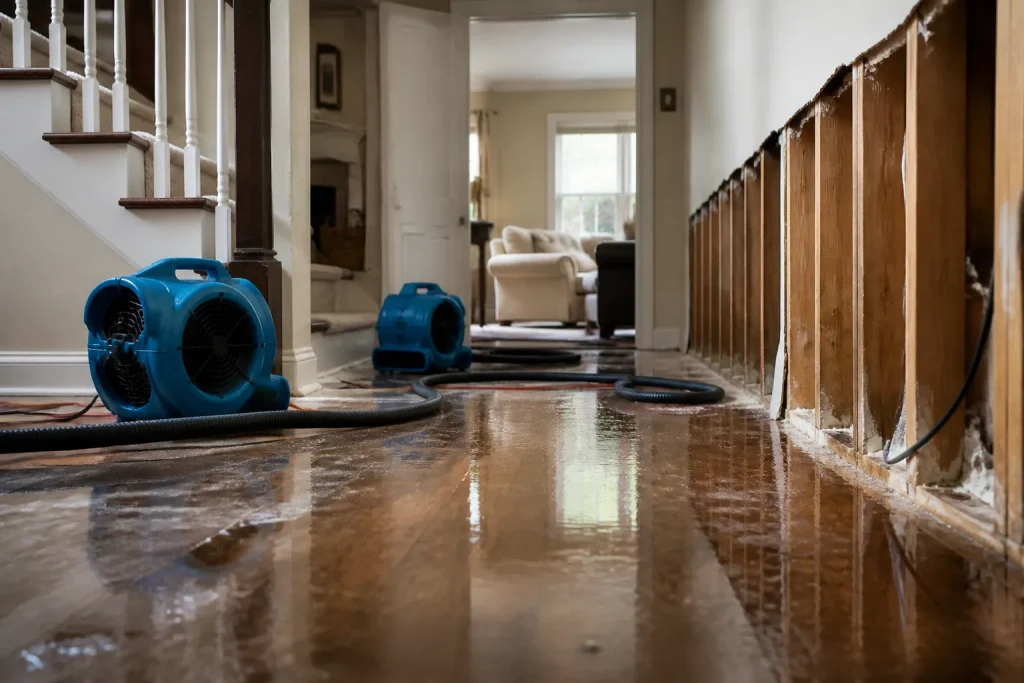
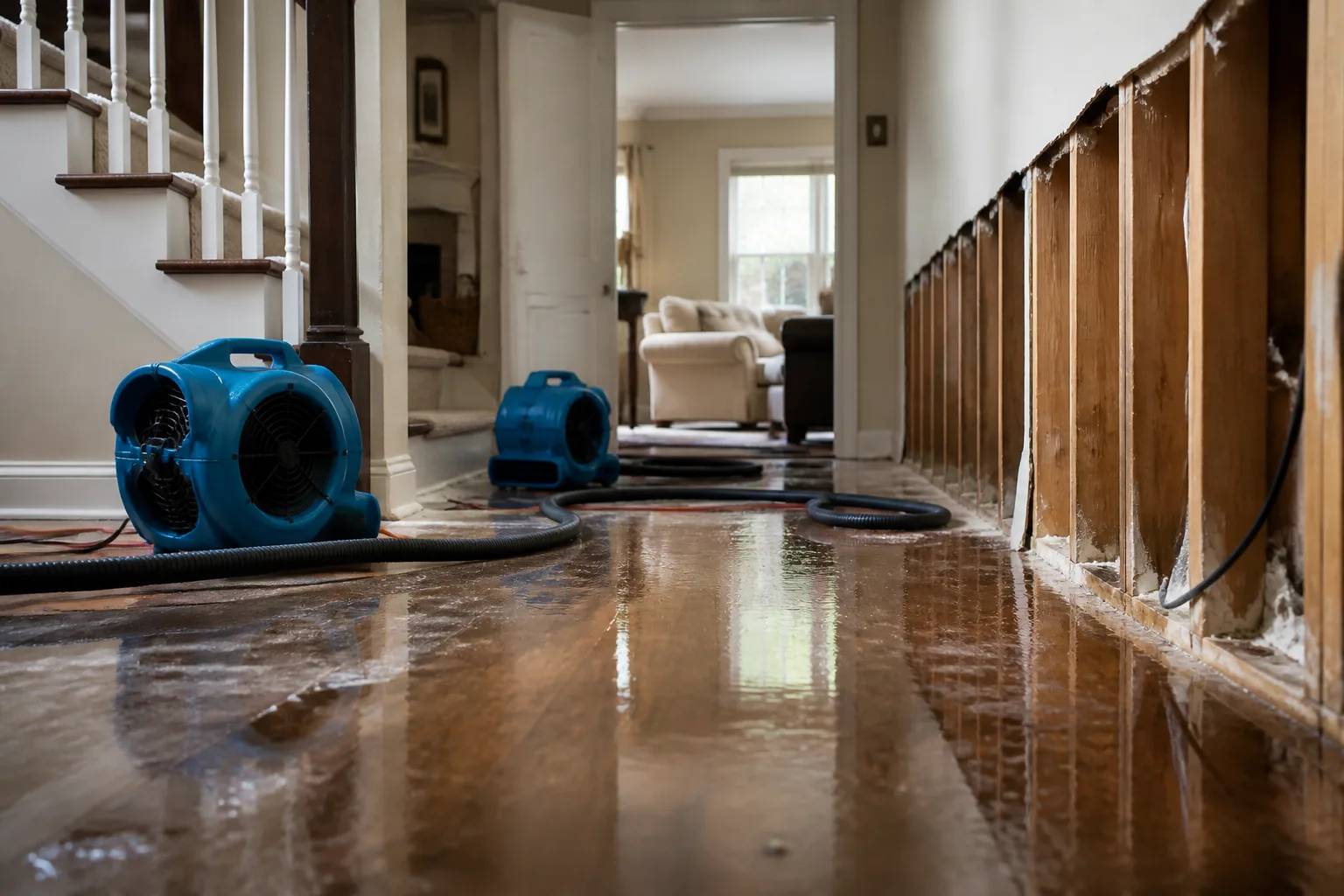
A Dri-Eaz LGR in the wrong part of a Glendale row house is a very expensive paperweight. We’ve walked into homes where a previous contractor dropped a dehumidifier in the middle of the kitchen and called it done, while the real damage sat four feet away behind a basement wall.
Drying a space is about controlling airflow and vapor pressure. The moist air has to reach the dehumidifier. If the machine is isolated from the wet materials by a doorway, or if no air movers are pushing the damp air toward it, the dehumidifier recycles the same dry corner all day while the wet wall behind the cabinets never gives up its moisture.
Proper sequencing matters in attached Glendale housing stock, where shared walls and limited exterior drainage change how water moves from unit to unit. A staged approach looks like this:
- Extract, extract, extract. No dehumidifier in the world should be the first tool on the job. Standing water comes out first.
- Map the moisture. Good technicians use moisture meters and infrared cameras to find the actual perimeter of the water damage, which is always larger than the visible stain.
- Position air movers to create airflow across every wet surface and toward the dehumidifier’s intake side.
- Seal the room. Close doors and windows. The dehumidifier works against the room’s air, not the outside Glendale humidity.
Some situations call for specialized tools like Injectidry systems that force air through cavities under floors or behind walls. Those get deployed when the moisture map shows pockets that regular airflow won’t reach. The equipment brand matters, no question. But the person reading the moisture map on day one is the one making the plan.
What a Legitimate Moisture Log Looks Like
You should never sign off on a water damage job in Glendale without a moisture log. It’s the paper trail that proves the drying happened, not just that the equipment ran for a few days.
A real moisture log includes:
- The date and time of every reading
- The GPP and relative humidity in each affected room
- The baseline readings from unaffected areas
- The dry standard target for each space
- Notes on equipment adjustments, like moving an air mover or adding a second dehumidifier
The log should show a clear trend. It won’t be perfectly linear, and a cold snap or a humid stretch of Glendale weather can slow things down for a day or two. But over a week-long dry-out, the numbers should trend steadily toward the baseline. A log with missing days, flat readings, or numbers that jump around without explanation is a red flag.
We pulled a dehumidifier out of a garage over in Glendale last week where another company had been running it for ten days. The log, if you could call it that, was a sticky note with one number written on it. The drywall behind the garage door was still holding 22 percent moisture. That’s not a drying plan. That’s a rental fee with extra steps.
Ask any restoration company this one question before they set up equipment: “Will you show me the daily psychrometric readings in writing?” If the answer is anything other than a simple yes, call someone else. That question filters out companies that replace extraction with equipment rental better than any online review.
Dri-Eaz and the Rest of the Toolbox
Dri-Eaz makes top-tier dehumidifiers, but no single brand covers every part of a water damage job. A proper Glendale dry-out usually involves several pieces of equipment working together.
Air movers from brands like XPOWER and B-Air keep air circulating across surfaces so moisture keeps releasing into the airstream. For hard-to-reach cavities, Injectidry mats can pull water from under hardwood floors or inside wall cavities that would otherwise stay wet until mold gets established.
The important thing is that the equipment be commercial-grade and matched to the room size. A residential dehumidifier from a big-box store cannot handle the moisture load of a flooded Glendale basement. It will run continuously, overheat, and leave your walls damp while you pay the electric bill for the privilege.
Our technicians train to IICRC standards, which cover not just how to run the equipment but how to select it, place it, and verify it’s working. That training is what separates a real restoration company from a guy with a truck and a rented fan.
For Glendale homeowners dealing with the aftereffects of water damage, mold is the quiet second act. Wet materials that dry too slowly almost always end up with some form of microbial growth. That’s a separate conversation, but if you suspect it’s already underway, our mold remediation in Glendale services address it properly, not with a spray and a shrug.
When to Call a Pro Instead of Renting Equipment
You can rent a dehumidifier and run it yourself. Before you do, consider what you’re signing up for. You’ll be guessing at capacity, guessing at placement, and guessing at when it’s actually dry. You’ll have no moisture log, no psychrometric readings, and no one to call if the numbers don’t move. The damage from a botched dry-out doesn’t show up for weeks, and by the time it does, you’re dealing with a bigger problem than the original leak, sometimes involving a full tear-out.
If the water came from a sewage backup, or the leak has been running behind a wall for more than a day or two, do not handle this yourself. Contaminated water and hidden mold are not DIY territories. Call a professional who has the equipment, the training, and the written guarantee.
Floodline Restoration Co. has been answering calls from Glendale residents for years, and every job ends the same way: a dry home, a moisture log in your hand, and the 90-Day Done Right Promise in writing. If it’s not done right, we make it right. No arguing.
Related services in Glendale we handle every week include water damage restoration and mold remediation. If you’re dealing with standing water, a leaking supply line, or a basement that keeps flooding, call us before the problem spreads.
The Bottom Line
Dri-Eaz equipment is professional-grade and genuinely excellent. It will dry your Glendale home faster and more thoroughly than anything you can rent at a hardware store. But the machine is only as good as the plan behind it. Ask for daily psychrometric readings in writing. Refuse to sign off without a moisture log. And if the company you’re considering cannot explain grains per pound, they will not be able to explain why your walls still smell musty in six months either.
If you’re in Glendale and need help, Floodline Restoration Co. offers free estimates. Call (845) 482-0653 and a live person answers, day or night. We’ll be there when we say.
Frequently Asked Questions
Water damage restoration in Glendale typically ranges from $1,500 to $6,000 depending on the size of the affected area, the length of time the water sat, and whether demolition or rebuild work is required. A small, contained leak in a single room will land at the low end. A flooded basement with soaked drywall, carpet pad, and baseboards will run higher. Exact pricing depends on the scope, and any honest company will provide a written estimate before work starts. Call (845) 482-0653 for an exact quote, estimates are free.
Most Glendale homeowners policies cover sudden and accidental water damage, like a burst pipe or a failed supply line, but not gradual leaks or neglect. Sewage backups often require a separate rider. The fastest way to know is to document everything with photos and call your carrier immediately. Floodline Restoration Co. provides photo-documented assessments and bills your insurance carrier directly, so you never have to play messenger between the restoration crew and the adjuster.
A typical Glendale water damage dry-out takes three to five days when the equipment is properly sized and staged. Larger jobs or slow leaks that sat unaddressed can take up to seven or eight days. The drying process is complete when the affected rooms reach the dry standard established from unaffected areas of the home, not when the floors feel dry to the touch. Refuse to sign off on any job without a written moisture log showing that progression. Call (845) 482-0653 and we’ll walk you through what to expect before work begins.
LGR stands for Low Grain Refrigerant. LGR dehumidifiers like Dri-Eaz units use a different refrigerant that keeps pulling moisture from the air at lower humidity levels and lower temperatures than conventional dehumidifiers. That matters in a Glendale basement or crawlspace because building materials release moisture slowly over days, and an LGR keeps the air dry enough to draw that moisture out until the structure actually reaches its dry standard. A standard dehumidifier stops being effective well before that point. Call (845) 482-0653 for a free assessment and a drying plan built around your home’s specific conditions.
Written by Curt Bowman, Owner at Floodline Restoration Co., serving Glendale since 2010.
Need Damage Restoration Help?
Call Floodline Restoration Co. - licensed & insured, here with fast after-hours help in Glendale.
(845) 482-0653