
Quick Summary
Addressing fungal contamination in Queens row houses and residential properties requires a professional mold removal service that identifies hidden moisture pathways behind plaster and shared brick party walls rather than relying on superficial surface cleaning. Floodline Restoration Co. delivers certified structural remediation using infrared thermal diagnostics, negative-air HEPA containment, and transparent upfront pricing to safely eliminate colonized materials at the root. Readers will understand standard remediation workflows, containment standards, and insurance processes, enabling them to contact Floodline Restoration Co.'s 24/7 live dispatch team to schedule an immediate visual inspection and thermal moisture assessment.
Mold Removal Service: Fast, Professional Queens Mold Elimination
When you discover mold in an attached Queens row house or multi-family building, surface cleaning is rarely enough. Floodline Restoration Co. provides professional mold removal service across Glendale, Ridgewood, Maspeth, Middle Village, and Woodhaven. We focus on finding the moisture driving the growth, isolating the work area, and safely removing colonized materials without spreading spores into your living space. According to the U.S. EPA, roughly one-third to one-half of all structures in the United States have damp conditions that may encourage mold development. In dense urban neighborhoods where brick party walls connect neighboring properties, moisture problems require a structured, experienced approach.[2]
Our technicians use calibrated moisture meters and thermal imaging cameras to track hidden water paths behind plaster and shared masonry walls. We give you a clear, written scope of work before setting up equipment, coordinate directly with your insurance carrier, and follow strict containment standards. Call Floodline Restoration Co. to schedule an immediate on-site inspection.
What Is Included in a Professional Mold Removal Service?
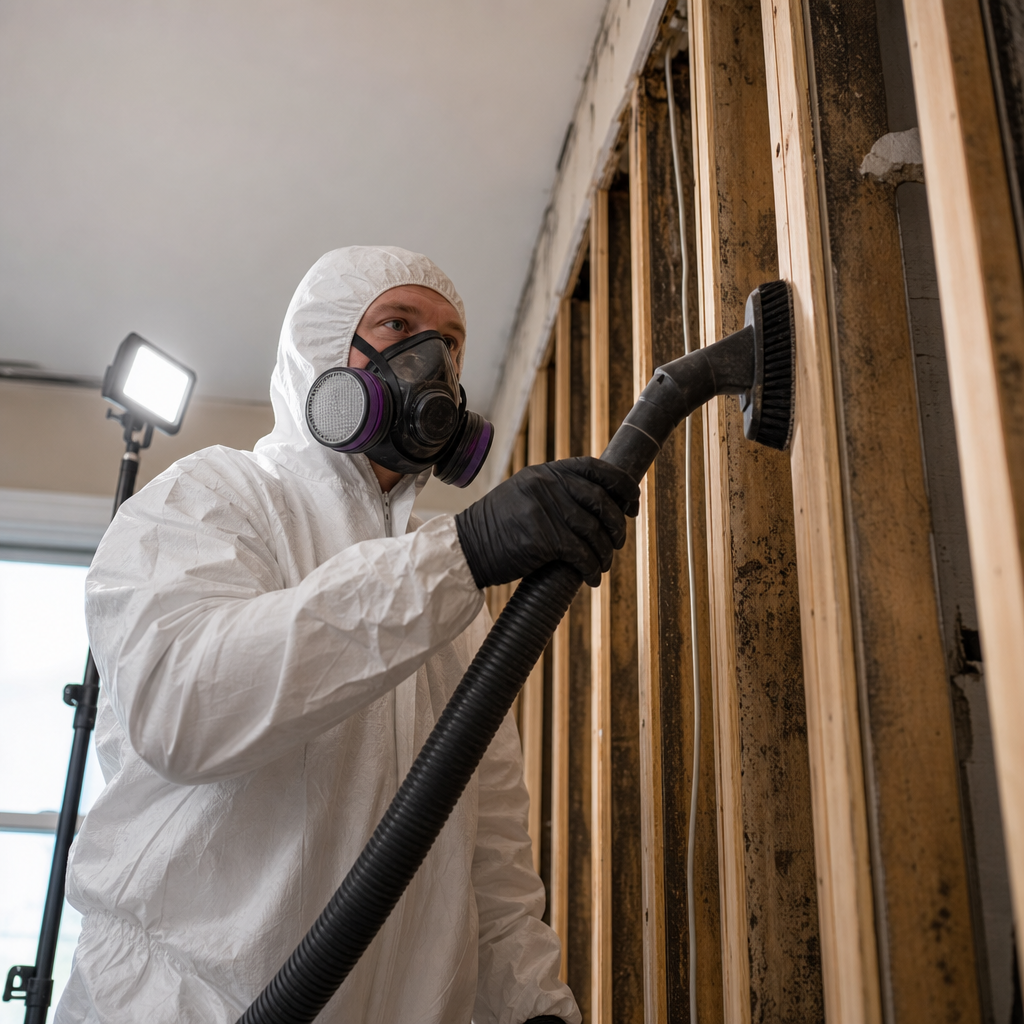
What to expect from a professional mold removal service: A professional team identifies the source of moisture, sets up negative-air containment barriers, runs commercial HEPA filtration units, removes unsalvageable porous materials, and treats structural framing with EPA-registered antimicrobials. The goal is to correct the moisture source and return indoor spore counts to normal background levels.[1]
In our company practice, residential mold removal targets the moisture source rather than merely wiping away visible surface mold. The EPA does not have a certification program for mold inspectors or mold remediation firms, but reputable contractors follow IICRC S520 guidelines to ensure safety and quality. In Queens properties, mold remediation often requires checking beyond the room where growth is visible because water travels easily through older framing and shared brick walls. Our standard project workflow follows three controlled steps:
- Moisture Mapping and Source Detection: Pinless meters and infrared cameras trace moisture pockets behind baseboards, plaster, and subflooring.
- Negative Air Containment: Polyethylene barriers with sealed zip doors isolate contaminated zones, preventing airborne spores from drifting into clean rooms.
- Physical Removal and HEPA Scrubbing: Colonized drywall and insulation are bagged and removed under continuous negative pressure, followed by HEPA vacuuming and antimicrobial treatment of structural studs and joists.
Immediate Containment and Air Scrubbing
The CDC notes that dampness and mold are associated with various respiratory and non-respiratory health problems in workers and building occupants. Disturbing mold without containment releases millions of spores into the air. Whether we perform a main-floor cleanup or an attic mold removal service, our crews install heavy-duty plastic containment zones and run commercial HEPA air scrubbers. These units pull air through multi-stage filters, venting clean air outside while keeping indoor air safe for your family.[3]
Addressing Root Sources vs Surface Bleach
Spraying chlorine bleach on porous drywall or wood framing only alters surface color while leaving fungal root systems (hyphae) intact inside the material. When moisture persists inside a wall cavity, mold returns quickly. Property owners searching for professional mold remediation rely on physical material removal, structural cavity drying, and antimicrobial application rather than temporary cosmetic fixes.
What Does a Mold Removal Service Cost?
The average cost for professional residential mold removal typically ranges between $1,500 and $4,500. Total pricing depends on the square footage involved, accessibility, the porosity of affected materials, and the amount of structural drying required.
Key Factors That Influence Your Final Investment
Four primary factors influence project costs: material porosity, accessibility, contaminated square footage, and structural moisture migration. Cleaning non-porous concrete is straightforward, whereas removing water-damaged plaster, subflooring, or finished basement walls requires more labor and controlled disposal.
In attached brick buildings, water frequently travels laterally between units. Treating only your side without checking the brick assembly can lead to repeated failures. The CDC states that mold testing is not recommended because health effects vary by person and sampling cannot determine whether someone might become sick. We focus your budget on locating water intrusion and performing physical removal rather than selling unnecessary spore test kits. Floodline Restoration Co. gives you a transparent, written scope of work before any equipment is unloaded.[4]
Mold Removal vs Mold Remediation: The Queens Row House Difference
Need mold removal service?
We’re available now - call for a fast, free estimate.
While people often use the terms interchangeably, “mold removal” refers to physically clearing visible growth, whereas “mold remediation” encompasses the complete process of identifying water sources, isolating the area, filtering air, removing damaged building materials, and treating remaining structures to prevent recurrence. In Queens row houses, basic removal fails when capillary moisture remains trapped inside shared brick party walls.
| Remediation Step | Surface Bleach / Wiping | Basic Handyman Removal | Professional Mold Remediation Contractor |
|---|---|---|---|
| Party Wall Moisture Mapping | No | No | Yes |
| HEPA Negative Air Containment | No | Partial | Yes |
| Cavity & Masonry Drying | No | No | Yes |
| Source Correction & Insurance Billing | No | No | Yes |
Capillary Moisture Migration in Shared Brick Party Walls
Queens row houses and brownstones share uninsulated brick party walls. Brick is naturally porous, meaning water from an adjacent roof leak, faulty gutter, or neighboring plumbing failure can wick horizontally through mortar joints via capillary action. If you simply replace drywall on your side without drying the shared masonry, moisture will migrate back into the new wall cavity within weeks. Our mold removal company uses thermal imaging to trace moisture across shared walls, ensuring the masonry is dry before wall cavities are closed.
Why Single-Room Cleanup Leaves Hidden Moisture Behind
Treating mold as an isolated cosmetic spot in one room overlooks how water travels along floor joists and ceiling plates. Moisture often pools behind baseboards or beneath hardwood floors several feet away from the initial leak. Thorough containment, moisture tracking, and structural drying ensure that mold is removed at its origin rather than allowed to spread behind finished surfaces.
Basement Mold Removal Service
Basements in Glendale, Maspeth, and Woodhaven face continuous hydrostatic pressure, foundation seepage, and humidity buildup after heavy rainstorms. A successful basement mold removal service requires drying sub-grade masonry, cleaning structural floor joists, and capturing airborne spores before they travel upward into living areas.
Common Symptoms of Sub-Grade Microbial Growth
Because below-ground walls sit directly against damp earth, foundation cracks and porous mortar easily absorb groundwater. Watch for these common warning signs in your basement or crawl space:
- Musty odors: Persistent earthy smells drawn into upper floors through HVAC ducts and subfloor penetrations.
- Efflorescence: White, chalky salt deposits left on concrete or brick as moisture evaporates.
- Material warping: Buckling laminate flooring, peeling linoleum, or loose baseboards along perimeter walls.
- Dark perimeter staining: Discoloration along bottom wall plates, drywall edges, and wood studs.
Repair vs Replace: Concrete, Subfloors, and Framing
In our remediation practice, material porosity guides whether basement structural components can be restored or must be removed.
| Building Component | Remediation Procedure | Action Required |
|---|---|---|
| Floor Joists & Subfloor Framing | HEPA vacuuming, mechanical sanding, and EPA-registered antimicrobial wash. | Restore in place |
| Poured Concrete & Cinder Block | Antimicrobial scrubbing, pressure rinsing, and industrial dehumidification. | Restore in place |
| Drywall & Fiberboard Paneling | Controlled demolition inside containment, sealed disposal. | Complete replacement |
| Fiberglass Batt Insulation | Immediate extraction into heavy-duty disposal bags. | Complete replacement |
Floodline Restoration Co. conducts thorough moisture assessments in basements to locate foundation seepage before starting cleanup. Contact us today for on-site diagnostic assistance.
Drywall, Ceilings, and Shared Party Wall Restoration
Restoring mold-damaged drywall, lath-and-plaster ceilings, and party walls requires isolating framing cavities, removing contaminated building materials, and cleaning exposed structural wood under negative air pressure.[5]
Detecting Hidden Growth Behind Plaster and Drywall
Slow plumbing leaks, aging shower pans, and roof flashing failures often leak water silently into wall cavities. Moisture accumulates on the paper backing of drywall or the wood lath behind historic plaster. Rather than tearing open walls blindly, our technicians use infrared cameras to detect cold evaporation patterns and non-invasive pinless meters to confirm moisture levels before making targeted inspection openings.
Containment Protocols to Protect Living Areas
When cutting into mold-contaminated drywall, spores quickly aerosolize. Our containment process safeguards your home:
- Polyethylene Barriers: We seal doorways, supply vents, and return grilles with 6-mil plastic sheeting to contain the workspace.
- HEPA Negative Pressure: Air scrubbers exhaust air outside, creating a vacuum that prevents airborne particles from entering adjacent rooms.
- Controlled Material Removal: Contaminated drywall is cut cleanly, double-bagged inside the containment zone, and wiped down before removal.
- Photographic Documentation: Technicians record moisture meter readings and structural photos at every stage to support your insurance claim.
Attic Mold Removal Service and Roof Cavity Remediation
Need mold removal service?
We’re available now - call for a fast, free estimate.
An attic mold removal service addresses poor ventilation, roof leaks, and condensation on roof sheathing. In older Queens homes, bathroom exhaust fans vented directly into attic spaces or blocked soffit vents trap warm, humid air against cold roof framing, creating an ideal environment for mold growth.
Soffit Blockage, Inadequate Ventilation, and Roof Leaks
When moist air from living spaces rises into an unvented attic, it condenses against plywood or tongue-and-groove roof decking during cold months. Over time, wood decking darkens and becomes colonized with mold. Proper attic mold remediation requires correcting the airflow, fixing any flashing or slate roof leaks, and cleaning structural rafters.
Treating Roof Sheathing and Attic Insulation
In our company practice, we follow a disciplined process for attic cleanup:
- Insulation Extraction: Contaminated loose-fill or batt insulation is bagged under negative pressure to keep dust out of your living areas.
- Surface Cleaning & Sanding: Roof rafters and sheathing are HEPA vacuumed, hand-sanded or media-blasted, and treated with an EPA-registered antimicrobial wash.
- Ventilation Review: We verify that ridge vents, gable vents, and soffits are clear so moisture does not accumulate again.
Floodline Restoration Co. provides dedicated attic mold remediation to restore roof decking and keep indoor air clean.
How to Choose a Mold Remediation Contractor
When selecting a mold inspection and removal company, look for qualified technicians, commercial containment equipment, and transparent pricing. Because the EPA does not have a certification program for mold inspectors or mold remediation firms, avoid vendors who make exaggerated claims about government credentials or promise that a home will remain permanently mold-free.
Essential Standards and Technical Equipment
Professional microbial remediation requires specialized tools and disciplined containment. Ensure your residential mold removal contractor provides:
- Trained Technicians: Crews trained in IICRC standards for water damage restoration and applied microbial remediation.
- Professional Diagnostics: Calibrated pin and pinless moisture meters, thermo-hygrometers, and infrared cameras.
- True HEPA Equipment: Commercial air scrubbers and vacuums rated to capture 99.97% of particles down to 0.3 microns.
- Direct Insurance Billing: Itemized estimates using industry-standard pricing software (such as Xactimate) to streamline claim approvals.
Insurance Billing and Contractor Accountability
If you are looking for mold remediation near me, beware of contractors who offer low estimates over the phone only to double the price once work begins. Choose a local company that provides on-site visual evaluations, written scopes of work, and clear timelines.
Floodline Restoration Co. provides detailed reports, daily moisture logs, and direct insurance billing to protect your property and finances. Contact our Queens team to arrange your inspection.
Frequently Asked Questions About Mold Removal Services
Professional mold remediation resolves active fungal growth by fixing the moisture source, establishing negative-air containment, removing damaged porous materials, and treating structural framing to keep your home safe.
How much does professional mold removal service cost on average?
Most homeowners pay between $1,500 and $4,500 on average for a standard residential mold removal service. Total pricing depends on contaminated square footage, material porosity, and containment and drying requirements.
Does homeowners insurance cover mold removal and remediation?
Mold is usually not covered under standard homeowners policies except when tied to a covered peril and subject to policy limits. When mold results from a covered peril, Floodline Restoration Co. provides photo documentation, moisture readings, and itemized billing to assist with the insurance claim process.
What is the difference between mold removal and mold remediation?
Mold removal focuses on wiping or scraping away visible mold. Mold remediation is a comprehensive process that isolates the work zone with negative air, removes contaminated porous building materials, cleans structural wood, and dries the underlying moisture source so mold does not return.
How long does the mold remediation process typically take?
Project timelines vary depending on the extent of the damage, though typical residential mold remediation projects may take between one and four business days based on the required scope of work. Setting up containment and HEPA filtration takes a few hours, material removal and antimicrobial cleaning often take one to two days, and structural dehumidification may run for additional time to meet dry standards.
Is it safe to stay in my home during professional mold removal?
Yes, in most cases you can stay in your home. Our technicians isolate the work zone using sealed plastic containment barriers and run HEPA air scrubbers under negative pressure, ensuring spores and demolition dust do not enter unaffected living spaces. If mold affects your only bathroom, main kitchen, or primary HVAC system, short-term relocation may be recommended.
How do professional mold removal specialists test for hidden mold?
Specialists locate hidden mold by tracking moisture rather than relying on routine air testing. Using thermal imaging cameras, pinless moisture meters, and borescopes, technicians detect moisture trapped behind drywall, plaster, and subfloors. The CDC states that mold testing is not recommended because health effects vary by person and sampling cannot determine whether someone might become sick; our priority is always identifying water intrusion, drying the structure, and physically removing damaged materials. If you need emergency mold cleanup services or a dependable local mold removal service in Queens, contact Floodline Restoration Co. to schedule an assessment.
Need mold removal service?
We’re available now - call for a fast, free estimate.
Sources
- Healthcare use and health disparities associated with mold … – PMC – pmc.ncbi.nlm.nih.gov (2024)
- NYS Tox Mold Task Force Final Report, December 2010 – health.ny.gov (2010)
- Respiratory and Allergic Health Effects of Dampness, Mold … – PMC – pmc.ncbi.nlm.nih.gov (2011)
- Indoor dampness and mould health effects – PMC – NIH – pmc.ncbi.nlm.nih.gov (2007)
- Family and Home Characteristics Correlate with Mold in Homes – pmc.ncbi.nlm.nih.gov
Frequently Asked Questions
What happens if mold in a Queens row house originates from a neighbor's shared party wall?
When moisture wicks through shared brick via capillary action, Floodline Restoration Co. uses infrared thermal imaging to accurately map and document the migration path. Technicians provide detailed diagnostic reports that property owners and insurance adjusters can use to coordinate necessary structural repairs with neighboring building owners.
How is successful mold removal verified without purchasing costly spore test kits?
Remediation success is confirmed through rigorous physical inspection and calibrated moisture mapping to verify that structural materials meet baseline dry standards. Floodline Restoration Co. adheres to strict IICRC S520 protocols, ensuring all colonized porous materials are extracted under HEPA negative air and remaining framing is treated with EPA-registered antimicrobials.
How quickly can Floodline Restoration Co. inspect a suspected mold problem in Queens?
Floodline Restoration Co. maintains a 24/7 live dispatch team to schedule immediate on-site visual evaluations and thermal moisture assessments throughout Queens neighborhoods. Technicians identify hidden moisture pockets behind plaster or drywall and deliver an itemized, upfront scope of work before any containment equipment is unloaded.
About the author
 |
Sarah Jenkins Sarah Jenkins is a certified restoration specialist with over eight years of experience managing water and fire damage recovery projects in the New York metropolitan area. Holding an IICRC certification in Applied Structural Drying, she bridges the gap between technical mitigation and insurance claim processes. Her writing focuses on practical, step-by-step guidance to help property owners navigate the complexities of disaster recovery. |
Water damage, flood, or mold emergency?
We’re available now - call for a fast, free estimate.
Call Now - Free Estimate