
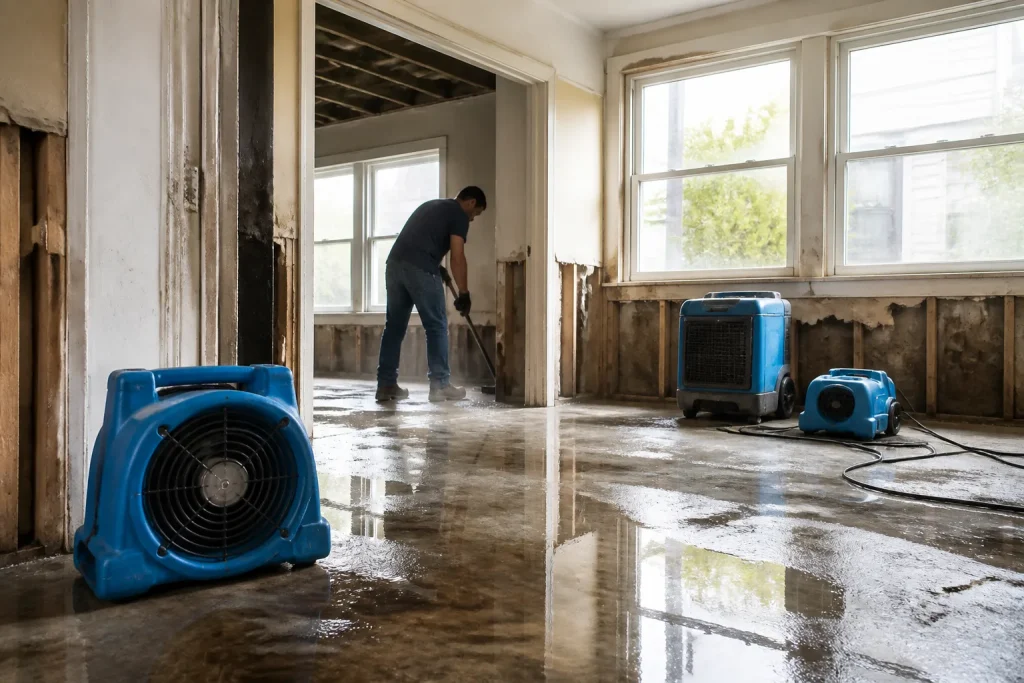
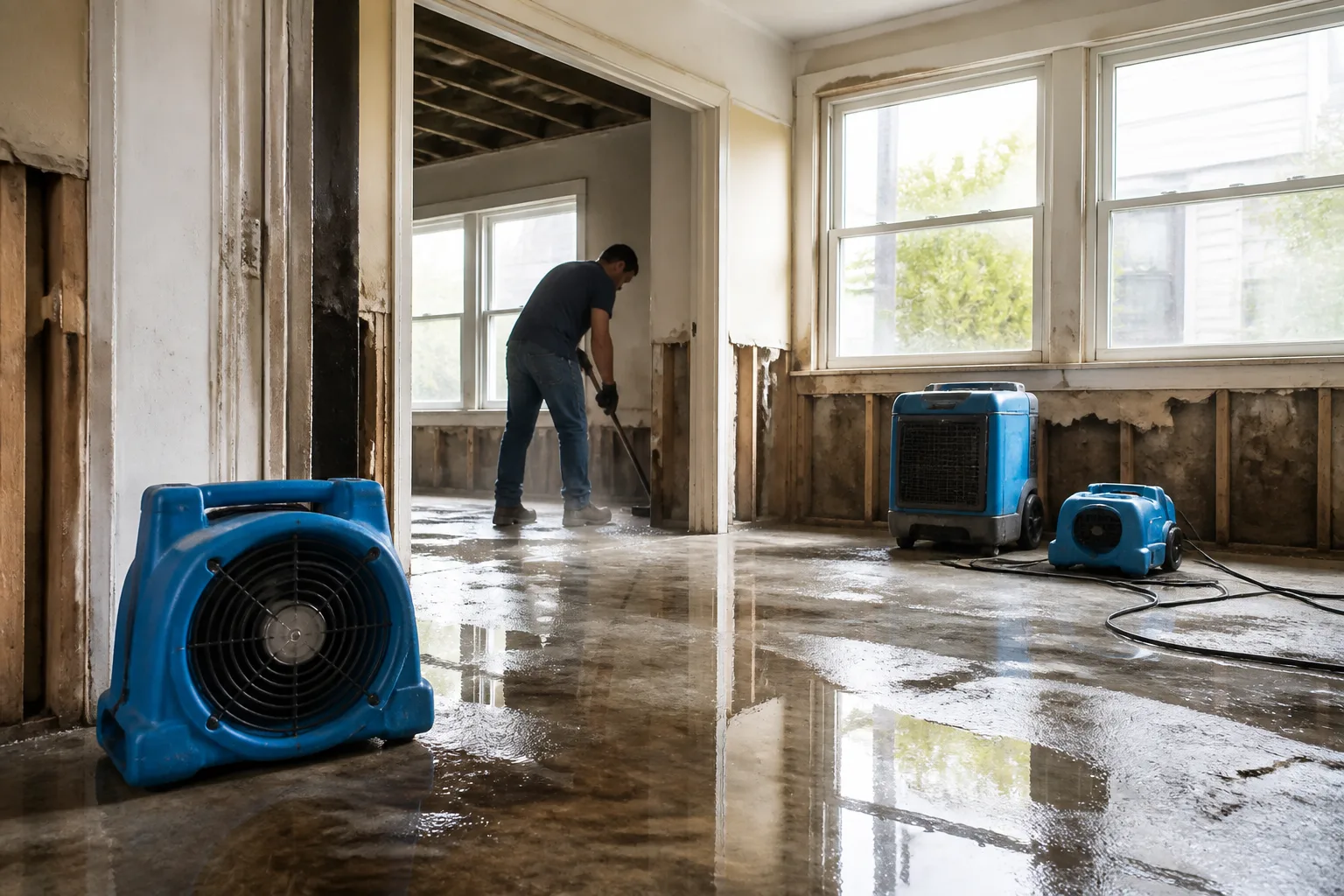
How to Choose the Right Damage Restoration Company in Glendale
Choosing a damage restoration company in Glendale comes down to asking four questions: who bills your insurance carrier directly, who signs the moisture log, who handles the rebuild, and what the written guarantee actually covers. Most companies fall apart at one of two handoff points: between mitigation and reconstruction, or between the contractor and your adjuster. You can spot the problem before you sign anything. If you’d rather not sort through it all yourself, call us at (845) 482-0653 and we’ll walk you through it.
The complaint that shows up most often in restoration reviews isn’t slow response or high prices. It’s this: “I had to explain my situation to four different people and coordinate between the water company and the contractor myself.” That’s not a customer service problem. It’s a business model problem. And it’s avoidable if you know what to ask.
Where Restoration Jobs Actually Fall Apart in Glendale
We’ve been doing this in Glendale since 2010, and the failure points haven’t changed much. The first is the handoff between the crew that extracts the water and the crew that rebuilds the wall. A lot of companies in this industry split those two functions. One team shows up with fans and dehumidifiers, gets the property dry, and leaves. Then a different contractor, often a sub the homeowner has never met, shows up to hang drywall and lay flooring. If the moisture readings were misread or the dry standard wasn’t actually met, the rebuild crew inherits a problem they didn’t create, and the homeowner gets caught in the middle.
The second handoff is between the restoration company and the insurance carrier. In many cases, the homeowner becomes the messenger. The contractor sends an estimate. The adjuster asks for more documentation. The homeowner forwards emails, makes phone calls, and tries to translate moisture logs they don’t fully understand. That’s a job no homeowner should have in the middle of a water or fire event in Glendale.
These two handoffs account for most of the frustration we hear about from new customers. The good news is that both are easy to check for before you hire anyone.
The Four Questions to Ask Before You Sign Anything
Any restoration company in Glendale can say they’re certified, fast, and insurance-friendly. Most do. The only way to tell them apart is to ask questions that expose exactly where their process breaks.
1. Who bills the carrier directly?
This is the single most revealing question. If the answer is anything other than “we do,” you’ve just found the second handoff. Direct insurance billing means the restoration company submits the claim documentation, negotiates the scope with the adjuster, and gets paid by the carrier. You’re not advancing money out of pocket and chasing reimbursement. At Floodline Restoration Co. home, we bill the carrier directly. The homeowner never plays messenger between us and the adjuster. In Glendale, where many homes are older and claims involve multiple line items, that matters a lot.
2. Who signs the moisture log?
Every legitimate water damage job requires daily moisture readings. Those readings tell you and your carrier whether the structure is actually dry or just looks dry. The person who signs that log should be the same certified technician who placed the equipment and reads the meters every day. If a company can’t tell you who signs the log, or if different people show up each day with no continuity, that’s a red flag. We moisture-map from day one using Dri-Eaz and Phoenix equipment, and the same crew that starts the job reads the meters until the dry standard is met. Then we hand that log to you and your carrier.
3. Who handles the rebuild?
Many restoration companies in Glendale stop at mitigation. They extract the water, dry the structure, and hand you a list of recommended contractors for the rebuild. That’s the first handoff, and it’s where problems compound. Ask directly: “Does your crew do the reconstruction, or do you sub it out?” If they sub it out, ask who the sub is, whether they’re background-checked, and who’s responsible if something goes wrong. We handle every phase from first extraction to finished rebuild with the same certified crew. No inherited contractors, no mid-job surprises.
4. What does the written guarantee actually cover?
Vague language like “we stand behind our work” means nothing when you have a moisture problem at day 60 and the company has moved on. A legitimate guarantee should be in writing and should state specifically what’s covered, for how long, and what the company will do if the work fails. Ours is the 90-Day Done Right Promise, which we call the Keystone Standard. If it’s not done right, we make it right. It’s in writing, and there’s no arguing about it. When you’re asking other companies this question, watch for hesitation or deflecting language. If they can’t hand you a written guarantee, keep looking.
What IICRC S500 Certification Actually Certifies
You’ll see IICRC certification mentioned on nearly every restoration website in Glendale. It’s worth understanding what it means. The IICRC S500 is a standard for professional water damage restoration. It establishes the procedures and precautions for proper water extraction, drying, and structural assessment. What it certifies is that a technician has demonstrated knowledge of those procedures at a point in time.
What it doesn’t certify is whether the company that sends a certified technician to your home is the same company that will finish the job. Certification is an individual credential, not a company structure. A restoration company can employ one certified tech who shows up for an hour and then hands your project to uncertified laborers for the rebuild. That’s exactly the handoff problem we described earlier, and certification alone tells you nothing about whether it exists. Ask the four questions. That’s what separates companies that are structured correctly from those that aren’t.
Our technicians are certified to IICRC, RIA, and IFA standards. But more important than the letters after a name is the fact that the same certified crew handles your job from start to finish.
Why Local Matters in Glendale Specifically
Glendale is a specific place. It’s not a generic market. Homes here sit in Queens County, which means building permits flow through the Queens Department of Buildings. If your restoration involves structural work, electrical changes, or certain types of plumbing repair, permits are required, and the timeline for approval affects your rebuild schedule. A restoration company that doesn’t work in Glendale regularly won’t know those timelines and won’t factor them into your project schedule.
There’s also the matter of carrier relationships. Insurance adjusters who handle claims in this zip code know the local restoration companies. They know which ones document properly, which ones inflate scopes, and which ones do the work they say they’ll do. When we submit a claim for a Glendale homeowner, the adjuster handling it may already be familiar with our documentation standards. That familiarity often means fewer requests for additional information and a smoother claims process.
And then there’s the simple matter of geography. Water damage in a Glendale basement behaves differently than water damage in a newer development with different soil composition and drainage. Fire damage in an older attached home requires different smoke mitigation approaches than in a detached structure. Local experience means we’ve seen the specific problems that show up in this neighborhood, and we know how to address them without guessing.
We pulled a water heater out of a garage over on 88th Street last winter where the homeowner had been told by a national chain that the entire subfloor needed replacement. Our crew got there, read the moisture, and found the dry-out could be done in place with Injectidry panels. Saved them thousands and about three weeks of reconstruction. That kind of call comes from knowing the neighborhood and reading the actual moisture, not following a script.
What a Legitimate Written Guarantee Should Contain
At a minimum, a restoration guarantee should specify three things: what’s covered, for how long, and what happens if the work fails. If any of those three elements is missing, it’s not a guarantee. It’s a marketing phrase.
Here’s what to look for:
- Scope: Does it cover the mitigation work only, or the rebuild too? A guarantee that covers the extraction but not the reconstruction leaves you exposed at the exact point where problems show up.
- Duration: A 30-day guarantee is barely enough time for materials to settle. Moisture problems can appear weeks after the job is finished. Look for at least 90 days.
- Remedy: What specifically will the company do if the work fails? Re-dry the affected area? Replace materials? Refund your money? “We’ll make it right” is not a remedy. It’s a promise to figure something out later.
Our 90-Day Done Right Promise is written, specific, and tied to our K.E.Y.S. values code: Krafted right, Every time, Your home first, Standing behind it. We don’t soft-pedal it, and we don’t hide behind fine print. If a company’s guarantee doesn’t hold up to these standards, that tells you how they’ll handle a problem if one arises.
When to call a pro: if you’re standing in water, smelling smoke, or seeing mold spread, don’t wait. The longer damage sits, the more it costs to fix. Document what you can safely, shut off the water source if you can reach it without risk, and call a certified crew. For water damage, Water Damage Restoration in Glendale covers what to expect from first call to final walkthrough. For mold concerns, Mold Remediation in Glendale explains the testing, containment, and removal process. And for fire and smoke events, Fire & Smoke Damage Restoration in Glendale walks through the full scope from board-up to rebuild.
The Bottom Line
Every restoration company in Glendale claims to be certified, fast, and insurance-friendly. The way to tell them apart is to ask four questions: who bills the carrier, who signs the moisture log, who handles the rebuild, and what the written guarantee covers. The companies that answer those questions directly and in writing are the ones structured to do the job right. The ones that deflect are the ones where the handoff problem lives. If you’re in Glendale and need help now, call (845) 482-0653 for a free estimate. We’ll answer the phone, answer your questions, and give you a straight answer about what needs to happen next.
Frequently Asked Questions
For water, sewage, or storm damage, response time matters because damage compounds by the hour. A certified crew should be able to reach your Glendale home the same day you call, and extraction should be running during that first visit. We answer the phone with a live dispatcher 24/7 and get a crew to your home quickly, but call (845) 482-0653 to confirm current availability.
Most homeowner policies cover sudden and accidental damage from burst pipes, storms, and certain fire and smoke events. The specifics depend on your policy and your adjuster’s assessment. What matters is that the company you hire bills the carrier directly and documents everything with photos and moisture logs so your claim has the support it needs.
If water has sat for more than a few hours or has penetrated drywall, flooring, or insulation, professional-grade drying equipment is necessary. Household fans can’t reach the moisture trapped inside wall cavities or under flooring. We use Dri-Eaz, Phoenix, and XPOWER equipment with daily moisture readings to confirm the structure actually reaches the dry standard, not just that the surface feels dry.
Costs vary by the size of the affected area, the type of damage, and what the rebuild requires. What should be consistent is how you’re charged: you should get a clear scope in writing before work starts, with direct billing to your carrier wherever possible. We offer $50 Off Any Repair Over $250, an $89 Seasonal Tune-Up, and a Senior & Veteran 5% Discount, always. Call (845) 482-0653 for a free estimate.
Written by Curt Bowman, Owner at Floodline Restoration Co., serving Glendale since 2010.
Need Damage Restoration Help?
Call Floodline Restoration Co. - licensed & insured, here with fast after-hours help in Glendale.
(845) 482-0653